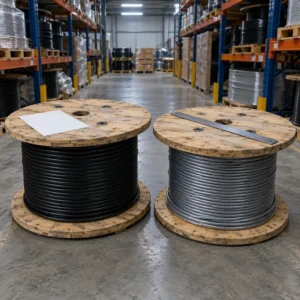
Customs Clearance for Cable in the EAEU: Codes, Documents and Single Window
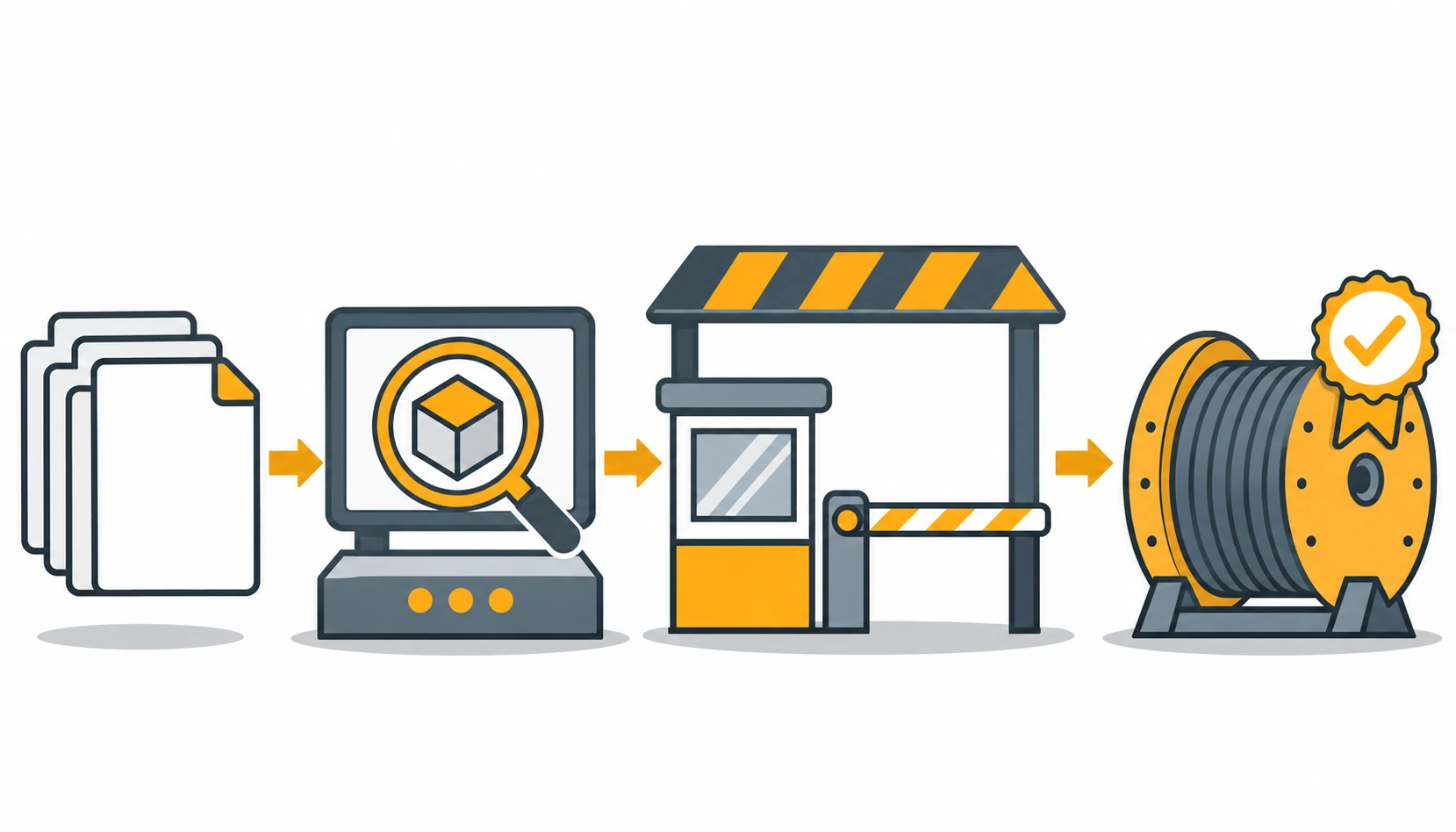
Quick Answer: Clearance in the Eurasian Economic Union is not a step at the border, it is a document set prepared weeks earlier and a code chosen from construction facts. The declarant has to be established inside the union, the goods are classified on voltage and connector detail rather than on product family, and the conformity certificate must name the constructions that are actually in the drums. When the invoice, the packing list and the declaration tell the same story in the same words, release is a formality. When they do not, the consignment waits while three parties correct each other by email.
Introduction
This page follows a cable consignment through the union’s clearance machinery: who declares it, how the code is fixed, which documents travel with it, what the declared value is built from, and where electronic filing changes the timing. Rates and duty levels are deliberately left out. They move with policy and product, and a buying guide is the wrong place to quote them.
The route behind the paperwork is the subject of our China-to-Central-Asia shipping overview, and the regional buying context sits in our Central Asian cable buying hub. What follows is the document layer that runs alongside both.
Why Clearance Is Decided Before the Truck Moves
A declaration is a legal statement of facts about goods, signed by someone the state can hold responsible. Those facts are fixed long before the truck reaches a gate: the construction on the drum, the voltage it is rated for, the lengths on the packing list and the certificate that covers them. Clearance is a reading of the factory file, not a negotiation at the border.
The failures that cost the most time are documentation failures. A packing list that says 500 metres where the invoice says 505. A certificate whose voltage range stops below the cable’s rating. A description written from a product family name instead of the construction. Each one stops the consignment in the same place, and none of them can be repaired by the driver. The cost sits between a correction request and a physical inspection, and both are measured in days rather than hours.
The practical rule is to build the clearance file while the drums are still in production. Certificate scope, drum marking, numbering and document wording can all be aligned at that stage. After loading, every correction becomes a message between three time zones. Country routes and their document demands are compared in our note on cable import certification by country.
The Code and the Declarant: Who Answers for the Entry
The declarant is the party legally responsible for the declaration, and in the union that party must be established there: the importer of record, or a broker filing in his name under a power of attorney. A manufacturer outside the union cannot be the declarant, however much of the paperwork he supplies and however complete it is.
That fact shapes the Incoterm conversation. Where a buyer asks a supplier to handle everything to the site, the declaration still needs a union-side party, and the arrangement is normally a broker engaged by the buyer with costs recharged to the contract. The split deserves a written sentence, because responsibility and payment are not the same thing in customs law.
The commonest structural error is a supply chain with no named declarant until the wagons are loaded. It happens on multi-party projects where the end user, the contractor and the financier each assume another holds the registration. The pattern sits among the international power equipment sourcing mistakes that repeat across regions.
HS Classification: One Consignment, Several Codes
Insulated cable sits in heading 8544, and the lines inside it split on facts that a sales description rarely carries: rated voltage, whether connectors are fitted, conductor material and the presence of fibre. A drum of 0.6/1 kV building wire and a drum of 12/20 kV screened cable are not the same article to a tariff, even when both are called power cable.
A real consignment is usually mixed. Drums of low voltage power cable, control cable, a box of glands, joint kits and a reel of earth wire can travel on one truck and belong on several declaration lines. Declaring the lot under one code is quicker to type and slower to release, because the first question an officer asks is which item the certificate covers.
Classification is defensible only when the technical file supports it. That means a datasheet stating voltage, conductor class, screen and sheath in the same words the certificate uses, and drum marking that repeats them. The discipline behind that is set out in our note on cable marking and traceability, and it is the same evidence a dispute would ask for.
The Document Set Behind a Cable Declaration
The core set is short: commercial invoice, contract or order confirmation, packing list per drum, transport document, certificate of origin, conformity certificate and the technical file that supports the declared description. Cable adds one specific demand. The conformity document has to name the constructions and ratings actually shipped, not a product family.
Line matching is the discipline that makes the set work. Every invoice line should appear once in the packing list, once on the declaration and once in the certificate scope, with lengths and weights that reconcile. Where a project ships in phases, the phase numbering has to survive all four documents, or the officer has to guess which drums a certificate covers.
The certificate side is where most delays originate, and it is worth checking before production is booked rather than after. Our power cable certification checklist lists what a conformity file should contain, and the wider equipment view is in the China electrical equipment certification checklist. Both are cheaper to apply at the quotation stage.
Valuation: What Customs Adds to the Invoice
Declared value starts from the price actually paid and adds what the price left outside: transport to the union border, insurance, packing and any commission other than a buying commission. The delivery term decides how much is already inside the number, which is why one commercial price produces two different customs values under FCA and under DAP.
Cable invites a second look for a different reason. Because the product sells close to its metal content, an unusually low unit price is not read as efficiency, it is read as an incomplete declaration. The defensible position is a build-up that shows conductor weight, insulation and sheath material, process cost and freight as separate lines. A cost sheet that states conductor weight per drum also answers the weight field on the packing list, so one document ends up serving two desks.
The term comparison itself is a procurement exercise, and its arithmetic is set out in our note on FOB versus CIF for power equipment. What matters for clearance is that the value build-up and the delivery term are written by the same person, at the same time, in the same currency.
The Single Window and Electronic Filing
Declarations are filed electronically, with the document set attached as a scanned package, and filing can begin before the goods arrive. Pre-arrival filing is what makes a same-day release possible. A declaration raised after the truck is already queued is a queue of its own, and storage runs from arrival, not from filing.
The electronic route also decides what gets inspected. Risk profiles are built from declared data, origin, consignee history and code, so accuracy is a routing matter as much as a compliance one. A consignment whose weight field is a rounded estimate is a consignment that may be stopped in order to be counted.
Data quality is therefore a factory task. Drum numbers, gross and net weights, lengths and descriptions should come from the same label set that is fixed to the drums, and our note on cable labeling and documentation covers how that set is built. One consistent label set feeds the packing list, the declaration and the arrival check.
Brokers, Powers of Attorney and Who Carries the Error
A broker files, the declarant answers. That distinction is the whole basis for choosing a broker: not the fee per declaration, but whether he can pre-classify the goods, ask the right technical questions early and put a classification opinion in writing before the drums move.
The engagement should also say who pays for what happens next. Duties, storage, corrections and penalties each need an owner in the contract, otherwise the supplier ends up paying for a description he did not write. A one-page annex listing those four is usually enough to remove the argument, provided it is written into the contract rather than left in an email that the next shift will never read.
The technical answers a broker will ask for are the same ones an inspector would: construction, voltage, standard, test evidence. Preparing them once, in a reviewable form, serves the declaration and the acceptance test together. That argument is set out in our note on type test report review.
The Clearance Document Map
Table 1 lists the five documents that decide release on a cable entry and what each one has to reconcile with.
| Document | Issued By | What It Must Reconcile With | Typical Failure |
|---|---|---|---|
| Commercial invoice | Seller, against the signed order | Contract price, delivery term, currency, item list | Price with no split for freight or packing |
| Packing list per drum | Seller, from drum records at dispatch | Invoice lines, drum numbers, lengths, gross and net weight | Rounded weights and unnumbered drums |
| Conformity certificate | Accredited body under the union scheme | Constructions, voltage range and standard actually shipped | Scope narrower than the drums in the load |
| Certificate of origin | Chamber of commerce or authorised body | Consignor, consignee, goods description, issue date | Description differing from the invoice wording |
| Transport document | Carrier or forwarder | Package count, gross weight, route and border point | Package count not matching the packing list |
The Clearance Freeze List
Table 2 is the list to settle before the production order is released, not after the drums are loaded. Packing detail for the same lane is in our note on cable drum packaging for export.
| Item to Freeze | How to Write It | Evidence to Attach | Cost of Leaving It Blank |
|---|---|---|---|
| Declarant and authority | Named importer of record plus a signed power of attorney | Authority document and registration number | No lawful declarant when the load lands |
| Declaration lines | One line per construction, voltage and connector state | Internal classification sheet per item | Reclassification of a stopped consignment |
| Description wording | Construction, voltage, standard and use in one sentence | Datasheet carrying the same sentence | Three documents telling three stories |
| Value build-up | Goods, freight to border, insurance and packing shown apart | Cost sheet with conductor content | Value questioned and revised upward |
| Certificate scope | Constructions and ratings listed, valid on the arrival date | Certificate with a scope annex | Drums waiting for papers that never cover them |
| Filing window | Pre-arrival filing date agreed per consignment | Filing confirmation from the broker | Release starting only after arrival |
| Cost and penalty split | Duties, storage, corrections and penalties each assigned | Contract annex with the four lines | A dispute over who pays for the delay |
When a Clean Declaration Is Not the Answer
When the description is written to lower the duty. Calling a screened medium voltage cable ordinary power cable changes the code, not the goods. An officer can open a drum, and the correction costs more than the duty it avoided.
When one certificate is stretched over a mixed load. A scope covering 0.6/1 kV constructions says nothing about the 12/20 kV drums on the same truck. Split the declaration or split the shipment before the border does it for you.
When a consolidated load is declared as a single line. Glands, joint kits and earth wire carry their own codes and often their own documents. One line for everything is fast to prepare and slow to release.
When the broker is chosen on the declaration fee. The fee is a rounding error against a week of storage. Pre-classification and a written opinion are what the fee is actually buying, and neither appears on a price list.
When invoice and packing list were written by different departments. Nobody reconciles them until the border, and the border is the worst possible place to discover a five-metre difference between two lines that both look correct.
RFQ Checklist
- Declarant named, with registration and a signed power of attorney
- One declaration line per construction, voltage and connector state
- Description wording fixed once and reused in every document
- Packing list per drum, with numbers, lengths, gross and net weights
- Certificate scope checked against the drums actually in the consignment
- Certificate of origin description matching the invoice wording
- Value build-up separating goods, freight to border, insurance and packing
- Pre-arrival filing date agreed with the broker in writing
- Duties, storage, correction and penalty costs allocated in the contract
- Technical file passed to the broker before production is released
Conclusion
Clearance on this lane rewards the boring disciplines: one description used everywhere, one line per construction, one certificate whose scope matches the drums, and one value build-up a cost sheet can defend. None of that is customs expertise. All of it is document control, done at the factory while the drums are still being made.
Kexingyu Cable Group (KXYE) prepares the file with the order: construction datasheets, drum-level packing lists, certificate scopes checked against the shipped mix and declarations pre-classified before loading. Send the destination and the construction list. A request for quotation is the fastest start.