Choosing an Industrial Cable Supplier for Turkmenistan

Quick Answer: An industrial project in Turkmenistan buys cable as a combined list: power feeders, control runs and instrumentation circuits, each with its own structure, evidence and handling requirements. The supplier worth shortlisting is the one that answers that combined list honestly, in-house where it builds and sourced where it does not, puts every deviation on paper, proves samples on the batch line, and states its packaging, documents and limits in writing. Capability boundaries, stated early, are a qualification asset rather than a weakness.
Introduction
Industrial buyers in Turkmenistan, whether in plant operations, contracting or project procurement, tend to source cable against a technical list rather than a catalogue. The list mixes voltage classes and circuit types in one enquiry, and it is exactly this mix that sorts suppliers: a factory strong in one family can be weak in another, and the buyer’s job at selection is to find out which is which before the order, not at the first deviation.
This guide works through the selection sequence for an industrial cable purchase: how the power, control and instrumentation combination should be presented, how to handle technical deviations, what sample testing proves, how packaging and documents are confirmed, how to submit the project list so it gets answered, and how to read a supplier’s capability boundaries. For the industrial constructions behind this kind of mixed list, see the product range.
Present the Power, Control and Instrumentation Combination as One List
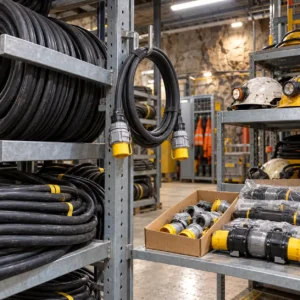
Group the list by circuit type, and keep the groups visible. Power feeders at their voltage classes, control runs with core counts and screening, instrumentation pairs or triads with their individual and overall screens. An enquiry that keeps these groups distinct gets a supplier answer that distinguishes its own strengths from its sourcing, which is the information selection actually needs. The difference between the control and instrumentation families is set out in our note on control versus instrumentation cable.
Write each line to be buildable. Voltage in full, conductor material and class, cores and section, insulation, screen, armour and sheath, plus the standard each line is checked against. Industrial environments add service conditions: oil contact in specific locations, temperature ranges, mechanical duty on specific runs. Name the condition where it exists and attach it to the line, because a condition attached to a line can be answered with evidence, while a general note cannot.
State which requirements are fixed and which are open. Project lines are fixed. Auxiliary lines, spares and resale quantities may be open. The supplier quotes differently against each, and knowing the difference prevents both over-pricing and under-specifying.
Handle Technical Deviations as Documents
Expect deviations on an industrial list, and plan for them. Sheath compounds, armour types, screen constructions and conductor classes are the usual candidates. The screen is not whether deviations occur, but whether they arrive as a clause in an email or as a sheet with three columns: your specification, the proposal, the reason.
Match each deviation to the condition it affects. A sheath change proposed on a line with stated oil contact needs evidence about oil resistance for that service, not a general compound datasheet. A conductor class change needs evidence about the installation method it affects. Deviations answered against the actual service condition can be accepted or refused on the merits; the rest are just wording.
Decide the acceptance rule before the deviations arrive. Buyers who know in advance which parameters are fixed by the project and which are negotiable answer deviation sheets in days instead of weeks. The equivalent-structure question behind many deviations is covered in our note on XLPE compared with PVC insulation.
Test What the Batch Will Be Judged By
Ask which line the sample runs on. An industrial sample is evidence only if it is produced the way the order will be: same line, same materials, same process. The direct question, and the answer recorded, cost nothing and prevent the most common sample disappointment.
Judge the sample against the service conditions you stated. Where the line carries an oil contact condition, the sample review covers the sheath against that condition. Where it carries a low-temperature storage or installation condition, the review covers flexibility and marking at the relevant temperature. The sample is where stated conditions get their first physical answer.
Require batch documents tied to drum numbers. Routine test results per batch, linked to the drums delivered, connect the approved sample to the shipment at receipt. For buyers adding an independent check on critical industrial lines, the arrangements are described in our note on third-party inspection.
Confirm Packaging and Documents for the Route
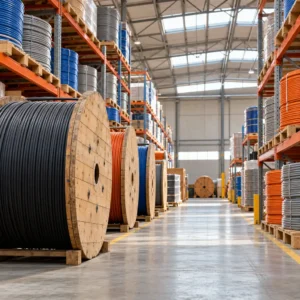
Packaging is specified for the real transport mode. Steel or wooden drums, protection for flanges and cable ends, packing for the handing equipment at the receiving point. An industrial shipment that arrives with a damaged drum end loses installation time that no price compensates, and the packaging practice that prevents it is set out in our note on export drum packaging.
Documents are listed per line and per shipment. Test reports naming the constructions, certificates as applicable, packing lists matched to drums, and the marking content agreed before production. An industrial handover checks documents as carefully as it checks drums, and the document set is part of what was bought.
Keep identity through every transshipment. Drum numbering that survives reloading, batch references on labels, and a packing list that reconciles at the receiving gate. Long routes punish shipments whose identity depends on one careful handler.
Submit the Project List So It Gets Answered
Send one structured enquiry, not three conversations. The combined power, control and instrumentation list, with quantities, drum requirements, service conditions and destination, sent as one document, gets one comparable offer. Split enquiries get split answers that never quite reconcile at comparison time.
Ask the capability questions in the enquiry itself. Which lines are in-house, which are sourced, which reports match each line, what MOQ and drum lengths apply per line, what the price includes and how long it holds. A supplier who answers these inside the quotation has done half the qualification work for you. The structure of such an enquiry is set out in our note on the industrial cable RFQ checklist.
Let the supplier price its own limits. Where a line is not in-house, the honest answer is a sourced line with the interface stated. That is workable, and often cheaper than a second supplier for one construction. What breaks projects is not sourcing but silence about it, which is why the answer belongs in the quotation. The buying sequence from enquiry to repeat order is covered in our note on buying cable from China.
Read the Capability Boundaries Correctly
A stated boundary is information; an unstated one is a risk. A supplier who says “our instrumentation range covers screened constructions to this specification, and beyond that we source” has given you a planning fact. A supplier who says “yes” to everything has given you nothing, and the first deviation sheet will say what the enquiry should have.
Match the boundary to the duty, not to the industry. Oil-resistant construction is a material property for a stated service: the fluid, the temperature, the exposure time. It is not a general certificate for every hydrocarbon environment, and neither a fire-resistant construction nor an armoured one substitutes for the condition the site actually imposes. State the condition; judge the evidence against the condition.
Keep the boundary review alive after award. Repeat orders stress exactly the lines where a supplier was nearest its limit. Review the boundary notes at each new enquiry, because production bases and ranges change, and last year’s gap may be closed or wider now. The audit questions that keep this current are in our note on supplier audits for projects.
For an instrumentation and control purchase in Turkmenistan, our guide to buying instrumentation and control cable for Turkmen projects applies the same boundary test to the circuit groups.
Industrial Supplier Capability Table
The table sets out the capability verification for an industrial combined list: what to verify, the evidence that answers it, and the boundary questions to put directly in the enquiry.
| Verification Item | Evidence to Request | Boundary Question for the Enquiry |
|---|---|---|
| Power feeder coverage | Reports naming voltage class, cores and section; in-house answer per line | Which voltage classes do you build in-house, and where does that stop? |
| Control run coverage | Reports on core counts, screening and sheath for the specified constructions | Which control constructions are standard for you, and which are made to order? |
| Instrumentation coverage | Reports on individual and overall screen constructions named in the list | Up to what specification do you build instrumentation cables yourself? |
| Service condition evidence | Material evidence for each stated condition: fluid contact, temperature, duty | For the conditions we named, what test or report supports the construction? |
| Deviation handling | A three-column deviation sheet format, used in the quotation itself | Will you answer deviations per line with the reason stated? |
| Sample and batch link | Sample produced on the batch line; routine results tied to drum numbers | Is the sample made on the same line and materials as the order? |
| Packaging and identity | Packing specification and drum numbering that survives transshipment | How is drum identity kept through each reload on the route? |
| Quotation completeness | MOQ, drum lengths, copper basis, validity, documents and delivery basis in writing | What does your price include, and how long does it hold? |
How the Offer Becomes an Order
Compare the offers on the same three axes. Coverage honesty, evidence quality and quotation completeness. An industrial purchase rarely turns on unit price alone, because the costs of a wrong construction or a missing document arrive after the invoice and dwarf it. The comparison method that keeps this structured is covered in our note on comparing cable quotes.
Convert the answers into the order annex. The line list with standards, the accepted deviations, the sample records, the packaging and document requirements, and the delivery basis. For an industrial combined purchase this annex is the single most useful document in the file, and it is assembled from answers the supplier already gave.
The comparison itself, axis by axis, is worked through in our guide to comparing cable quotations for Central Asian projects.
Plan the first delivery as a qualification delivery. Whatever the award decision, the first shipment under a new supplier relationship is checked more carefully than the fifth. Drum counts against packing lists, sample-record comparisons at receipt, and a documented claim route. The discipline costs an afternoon and sets the tone for the relationship.
| Selection Output | Becomes | Checked By | If Skipped |
|---|---|---|---|
| Coverage answer per line | The annex line list with standards | Site and document controller at handover | Goods checked against nobody's written list |
| Deviation sheet | Accepted deviations recorded in the annex | Inspector comparing build to approval | A construction dispute with no approval trail |
| Sample record | The receipt benchmark for the first delivery | Receiving inspection | A batch judged by memory or by nothing |
| Packaging and document terms | Shipment requirements in the purchase order | Warehouse, carrier handovers, customs | Damage and document gaps handled as surprises |
| Quotation conditions | Price basis, validity and delivery basis in the contract | Purchasing and finance | Renegotiation after the metal moves |
Cost and Lead Time on an Industrial List
The combined list is priced as one production programme. Power, control and instrumentation constructions run on different lines with different cycles, and the shipment date is set by the slowest group. A supplier who quotes production time per group, rather than one blended number, is telling you where the programme’s critical path actually runs. The buyer’s lever is sequencing: delivering the group the site needs first, and letting the remainder follow, costs less than expediting everything.
Deviations carry cost in both directions. An accepted deviation can save money when it moves the line onto the supplier’s standard tooling, and it can cost money when it forces a special set-up. The deviation sheet is where that arithmetic becomes visible, which is one more reason it belongs on paper rather than in a call. Industrial buyers who review deviations with the service condition in one hand and the price effect in the other make faster, defensible decisions.
Service conditions price themselves into the sheath. Oil-resistant compounds, low-temperature flexibility and additional armour are material choices with real cost effects, applied only to the lines that need them. A list that attaches conditions to specific lines gets a targeted price; a list that applies conditions everywhere gets a premium on cable that never meets the condition.
Lead time honesty shows in the slot answer. Industrial programmes tolerate slippage badly, because cable is usually one of the last inputs before energisation. The supplier’s answer about the production slot, and what happens if it moves, is a selection input in its own right, and it is visible at quotation stage for the buyer who asks.
When a Single Industrial Supplier Is Not the Answer
When the list spans constructions no single factory builds. Split the list at the natural boundary and manage the interface deliberately: one supplier for power, one for special constructions, each qualified for what it actually builds. The fiction of a single source covering everything costs more than the coordination it avoids.
When the service conditions need evidence nobody has offered. A condition without obtainable evidence is a specification problem, not a sourcing one. Return it to the specifier for a realistic requirement rather than buying against a condition that will never be proven either way.
When the project calendar cannot absorb the qualification. An urgent industrial purchase may not leave time for samples and witnessed tests. Then the checklist shrinks to coverage, documents and delivery, and the shortcuts are recorded, so the next order for the same list starts from knowledge instead of luck.
When the boundary itself disqualifies. A supplier whose sourced lines would carry most of a critical list is a trader for this purchase, whatever the letterhead says. That can be acceptable, but it changes which questions matter, and pretending otherwise is how interfaces fail.
RFQ Checklist
- The combined list grouped by circuit type: power, control, instrumentation
- Each line buildable: voltage in full, conductor, cores and section, insulation, screen, armour, sheath
- Service conditions attached to the lines they affect: fluid, temperature, mechanical duty
- The standard per line, with deviations answered on a three-column sheet
- Sample plan on the batch line, judged against the stated conditions
- Routine batch results tied to drum numbers, as a required document
- Packaging specified for the real transport mode, with drum identity through transshipment
- MOQ, drum lengths, copper basis, validity window and included documents per line
- The delivery basis with destination named and the risk transfer point stated
- In-house versus sourced declared per line, with the interface managed where sourcing applies
Conclusion
Selecting an industrial cable supplier for Turkmenistan is a test of how honestly a supplier answers a combined technical list. The power, control and instrumentation groups presented together, deviations on paper, samples on the batch line, packaging and documents specified for the route, and capability boundaries stated as facts. Buyers who run that sequence shortlist suppliers they can hold to their answers, which is what an industrial purchase ultimately needs.
Kexingyu Cable Group (KXYE) manufactures power, control and instrumentation constructions in Quanzhou, states in-house coverage and sourcing per line, and answers industrial enquiries against the conditions as written. Send us your project list, quantities, service conditions and destination, or upload your technical specification, and we will answer line by line. A request for quotation is the fastest route to start.