Pakistan and Bangladesh: Emerging Demand for Grid and Data Center Cable
Quick Answer: Pakistan and Bangladesh buy cable through importer-led, price-sensitive channels — unreliable grids and booming digital economies create real volume for suppliers who price for the market and hold batch discipline.
Pakistan and Bangladesh rarely appear in the same sentence as hyperscale, and that’s precisely why they deserve a clear-eyed look. Both are among the most populous countries in the world. Both run electricity systems that are younger and less reliable than their demand deserves. And both have digital economies growing faster than their grids. Cable demand in the pair is therefore unglamorous and enormous: grid strengthening and loss-reduction programs, industrial estate electrification, commercial backup-heavy buildings, and a thin but real data center layer concentrated in Karachi, Lahore and Dhaka. The procurement culture differs from India’s consultant-led sophistication and from the Gulf’s national programs. It’s importer-led, price-sensitive and relationship-driven. This guide maps what the two markets buy, how their channels actually work, and what a foreign cable factory must accept and verify to serve them profitably.
Introduction
The demand engine in both countries is the gap between electricity supply and everything that needs it. Pakistan’s grid loses power to aging infrastructure and transmission bottlenecks. Bangladesh’s system has expanded generation rapidly, but the distribution layer and industrial connections lag the factory economy that drives them. Both patterns translate into the equipment families of utility grid expansion equipment — MV cable, distribution transformers, switchgear — and into the backup-heavy electrical culture of unstable-grid regions, where the supply-side patterns of off-grid and hybrid inverter systems shape what buyers expect cable to do. Above the grid sits a digital layer growing fast: telecom expansion, financial services, and early data center investments in Dhaka and Karachi. For a cable supplier, the pair offers volume without glamour, and it rewards suppliers who respect how differently these markets buy.
What the Two Markets Actually Buy
Pakistan’s bill is grid-led: transmission strengthening, distribution loss reduction, and the electrification of housing schemes and industrial zones buy MV cable and conductor in program volumes, while commercial construction in Karachi and Lahore buys building wire, LV distribution and the fire-rated cable that high-rise codes push. Bangladesh’s bill is industry-led. The garment and textile economy electrifies whole industrial parks on repeat schedules — demand rhythms that echo the park-driven patterns of industrial park power demand elsewhere in Asia — and its export-manufacturing compliance requirements pull fire-performance and LSZH specifications into factory buildings that pure price markets would never ask for. The data center layer in both is early but real. Carrier hotels and enterprise halls in Dhaka and Karachi buy the standard hall bill in smaller scale — MV intake, LV distribution, UPS strings — with the backup-heavy design culture of unstable grids applied to every run. Neither market yet buys like the Gulf. Both buy more than their headlines suggest.
| Dimension | Pakistan | Bangladesh |
|---|---|---|
| Demand engine | Grid strengthening, loss reduction, housing schemes | Garment-economy parks, compliance-driven building upgrades |
| Leading cable families | MV distribution, conductor, building wire, LV | Industrial LV, fire-rated building cable, control cable |
| Procurement culture | Importer-led, tender-and-relationship blend | Importer-led, compliance specs layered on price |
| Data center layer | Early enterprise halls, Karachi and Lahore | Carrier hotels and enterprise, Dhaka |
| Buyer sensitivity | Price first, batch proof second | Compliance first on exports, price close behind |
How the Channels Actually Work
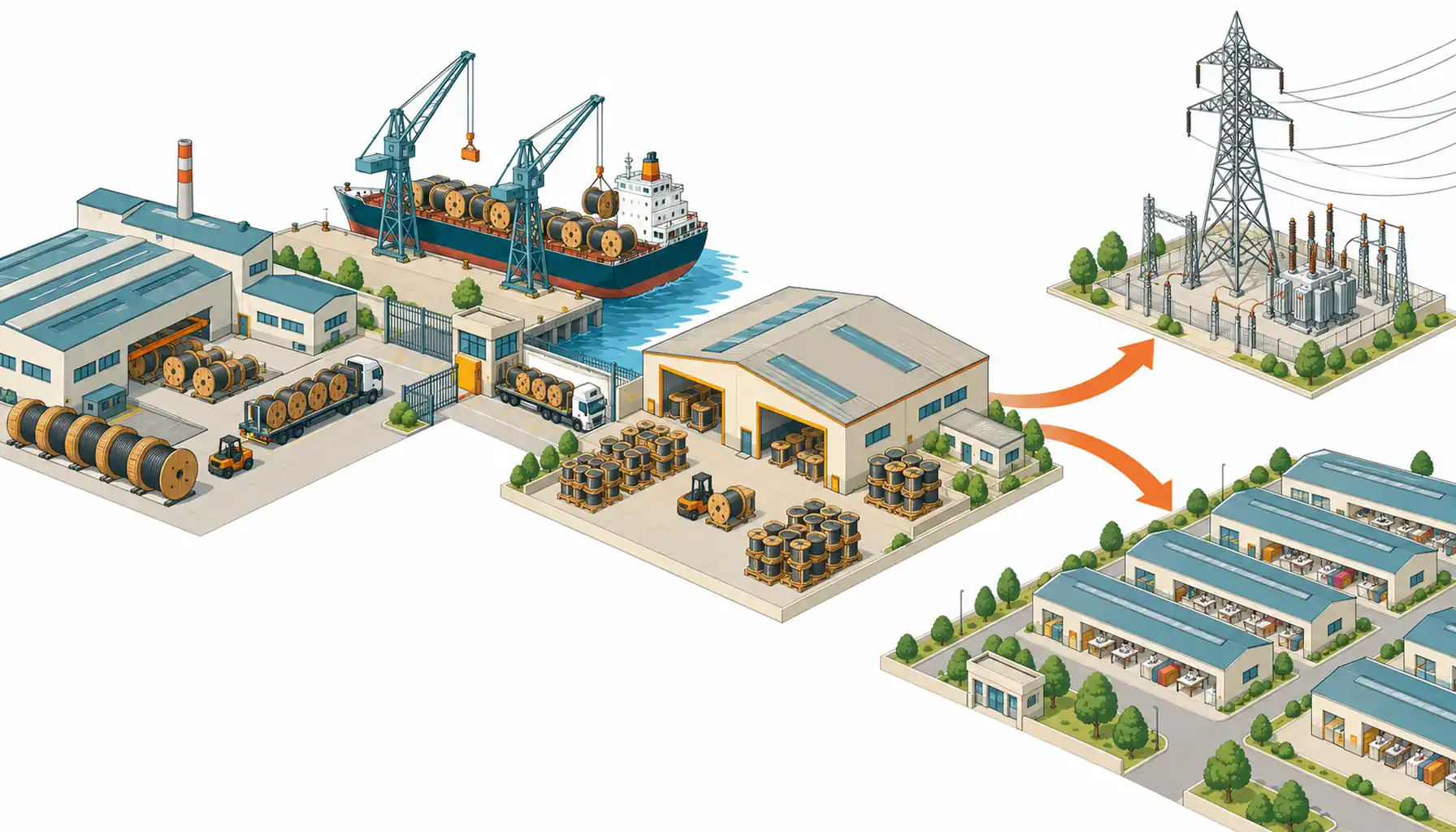
Both markets buy through importer-and-distributor chains more than through direct project procurement. A local importer holds the customer relationships, aggregates demand across projects, and pushes price pressure upstream to whichever factory offers acceptable paper at the lowest number. The paper matters more than newcomers expect. Pakistani tenders reference national and IEC standards. Bangladeshi compliance-driven buildings reference the fire and safety requirements their export customers audit against. And batch traceability separates working suppliers from one-shipment traders. The verification discipline of the power cable manufacturer checklist runs in both directions here: the importer screens the factory, and the wise factory screens the importer, because payment behavior and specification drift in these channels hurt suppliers who skip the check. Incoterms discipline decides the margin. On these routes, the freight-and-clearance allocation of FOB vs CIF for power equipment moves quotes by real percentages, and the recurring failure patterns of international power equipment sourcing mistakes show up as L/C discrepancies, port delays and specification drift that a tighter contract would have caught.
Serving the Pair Profitably
The profitable posture combines three habits. First, price for the market without degrading the product: the pair’s price sensitivity is real, and suppliers who strip quality to win the first order lose the repeat business that makes these channels valuable. The industrial LV and fire-rated families reward factories whose batch-to-batch consistency survives importer auditing. Second, respect the compliance layer where it exists. Bangladeshi export manufacturing buys to specs its customers audit, and a file that proves fire performance and low-smoke behavior turns commodity volume into specified volume. Third, hold the channel. Importer relationships in both markets compound over years, and the factories that keep one accountable contact, one documentation format and one honest calendar collect repeat orders that project-chasing competitors never see. The pair rewards patience more than sophistication — and it punishes shortcuts harder than either.
| Stage | Action | Classic Trap |
|---|---|---|
| Channel selection | Vet importers: track record, payment behavior, project base | Signing the loudest importer instead of the solvent one |
| Specification | Map tender and compliance requirements per segment | Quoting commodity specs into compliance-driven buildings |
| Pricing | Landed cost with incoterms and L/C terms explicit | FOB quotes that ignore who clears and who carries duty |
| Production | Batch identity and test reports per drum, audit-ready | Batch records skipped to hit the importer's price point |
| Retention | One contact, one format, one honest calendar, kept for years | Project-chasing that resets the relationship every order |
When Volume Is Not the Same as Value
Two cautions frame the opportunity honestly. The pair’s volume is real, but its margin structure is thinner than the Gulf’s or Singapore’s, and suppliers who treat these markets as a dumping ground for near-spec product eventually meet the compliance wall. A rejected shipment or an audited building costs more than the price premium ever was. And the digital layer is early: data center volume in both countries grows from a small base, and forecasting it with hyperscale math produces inventories and capacity promises the market cannot yet absorb. Enter for the grid and industrial volume that exists today. Hold the data center relationships for the layer that arrives tomorrow. And let the importer channel — disciplined, vetted, patient — carry the compounding.
RFQ Checklist: South Asia Lines for the RFQ
Put the market’s questions in writing:
- Importer vetting evidence: trade references, payment record, project base
- Standards named per segment: national, IEC, or compliance-audit specs
- Fire and low-smoke performance stated for compliance-driven buildings
- Incoterms and clearance responsibility fixed per route
- L/C terms and discrepancy handling agreed before production
- Batch traceability and drum marking format per shipment
- Repeat-order framework pricing for park and estate programs
Conclusion
Pakistan and Bangladesh are the unglamorous large markets of South Asia: grid programs and factory parks buying cable in volume through importer-led channels that reward price discipline, batch proof and patient relationships. Neither market needs a hyperscale story to be worth a supplier’s attention. What both need is a supplier who reads their channels accurately and holds quality through the price pressure.
Kexingyu Cable Group (KXYE) serves the pair with the posture they reward: audited importer relationships, batch-identified production that survives compliance checks, landed-cost pricing with the incoterms honest, and calendars kept through the market’s rhythm — cable supply built for volume markets where discipline, not drama, compounds the business.