Writing RFQs That Central Asian Buyers and Suppliers Answer Well
Quick Answer: A good RFQ is a set of sentences, not a hope. Name the destination and the Incoterms basis, write the specification so it cannot be re-interpreted, fix the drum plan, demand named evidence, and put the copper basis and a validity window in every money line. Ask every supplier to answer on the same sheet. Suppliers answer well when the questions are answerable, and comparable answers are where the margin hides.
Introduction
This page gives buyers the wording itself: template lines, block by block, that a Central Asian cable enquiry can paste and adapt. The process around the RFQ, from choosing suppliers to opening the answers, is walked end to end in our guide on requesting cable quotations from China for Central Asian projects, and the questions worth asking before an award are listed in our industrial cable RFQ checklist. Those two notes say what to do; this one says what to write.
The lines below are deliberately plain. Plain wording survives translation, forwarding and the long gap between enquiry and award better than clever wording does, and it reads the same in every inbox between Quanzhou and Almaty. Each block follows the same pattern: the sentence to send, why the sentence earns its place, and what goes wrong in this region when the block is left to chance.
Why RFQs Get Weak Answers in This Region
Weak answers are rarely supplier stubbornness. Most are the honest response to an unanswerable question: a BOQ pasted raw, a destination named without terms, a spec written in a national dialect only one bidder shares, or no validity window, so the price that arrives is already a guess about your own calendar. Suppliers fill the silence with assumptions, and every assumption becomes a difference you discover at comparison time.
The region adds its own twists. Two standards vocabularies sit side by side, so a construction named in only one invites the cheapest re-interpretation. Transit is long enough that packing and drum plans are price inputs, not afterthoughts. And copper moves fast enough that a quote without a basis clause is already stale when it lands. Each of these has a one-line cure, and each cure is a sentence in the template below.
The goal is not a longer RFQ. It is a shorter list of things suppliers have to invent, and a shorter list of surprises waiting at comparison time.
The Header Block: Project, Destination, Basis
The header decides how every price in the answer is built, so it goes first and it goes explicit. A working pattern: “Project: [name], [city], [country]. Delivery basis: DAP [city], Incoterms 2020. Consignee: [entity]. Required validity: 30 days from quote date.” Every supplier now prices the same journey to the same gate, and nobody guesses whether the quote includes the mountain pass.
Name the destination city, not just the country, because regional freight differs by corridor, and a DAP Almaty price and a DAP Tashkent price are different products. If partial deliveries are acceptable, say so in the same block: “Partial deliveries permitted, minimum one full drum per item.” That single sentence widens the pool of factories able to answer on time.
Leave the basis out and the answers will still arrive, each one priced to a different imagination of your logistics. The header is four lines; it prevents the most expensive kind of misunderstanding, the kind discovered after the order. It also sets the tone for everything below: an enquiry that states its terms plainly collects answers written the same way.
Specification Lines That Cannot Be Re-Interpreted
Write each cable item as a construction sentence, not a catalogue nickname. A working pattern: “Item 3: 0.6/1 kV power cable, Cu/XLPE/PVC, 4×95 mm2, IEC 60502-1, black, per Schedule A.” Standard, voltage, construction, size, colour, and a schedule that holds the full data. Nicknames like “GOST cable” or “station cable” invite every bidder to price its own interpretation, and the cheapest interpretation wins the comparison and loses the acceptance.
Where a local requirement sits alongside the IEC base, name both in one line: “Construction to IEC 60502-1; marking and documents per [local requirement].” This is the dual-reference habit the whole region runs on, and it belongs in the spec line, not in an appendix the bidders may not read. Country-specific preparation, BOQ quirks included, is worked through in our guide on preparing power cable RFQs for Uzbekistan, and the pattern transfers across the five markets.
One more line pays for itself: “No substitutions without written approval.” It converts the quiet equivalent-offer habit into a conversation, and conversations are cheaper than deliveries.
Quantity and Drum Lines That Survive the BOQ
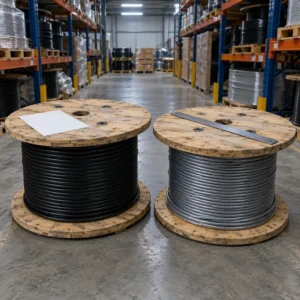
Quantities arrive as metres; they travel as drums. A working pattern: “Qty: [12,000] m per item, wound on [500] m steel drums, plus [3]% spare, packing to [named standard].” Drum length is a transit decision first and a commercial one second, and buyers who name it get quotes for the same physical object. Those who leave it open receive drum plans built for the supplier’s convenience, and the difference shows up as joints in inconvenient places. Packing and marking expectations are specified in our note on cable drum packaging for export, and the line in the RFQ simply points at that standard.
State the spare policy in the same block, because a percentage assumed by the buyer and a percentage assumed by the supplier are two different orders. If reels or wooden drums are preferred for the last leg, name the preference and let the price follow it honestly.
The test of a good quantity block is simple: any two suppliers reading it picture the same drums arriving at the same gate. If a bidder asks what drum length you meant, the block was not finished, and neither is the price it will produce.
Delivery Lines That Set a Real Calendar
Delivery wording has two halves: when production must start and when drums must land. A working pattern: “First delivery within [6] weeks of order; completion by [date]; delivery window [month] to avoid winter transit.” The second half is regional practice, not decoration: schedules that ignore the season end up paying for the season anyway, in queue time and in risk. Lead-time structure and how it moves is covered in our note on MOQ and lead times for cable orders, and the RFQ line is where that structure gets contractual.
Name the unloading responsibility explicitly, because DAP ends at the agreed place and someone still has to take the drums off the truck: “Unloading at consignee site by buyer; supplier provides lifting points per drum.” Small sentence, fewer arguments at the gate.
If the programme has milestones, put the milestone table in the RFQ rather than promising it later. Suppliers price calendars better than they price surprises, and a bidder who can see the whole season can quote the whole season.
Evidence Lines: Documents Named, Not Implied
“As per standard” is not an evidence line. Name the documents: “Attach for each item: type-test report (last 5 years), routine test certificate, factory licence, and cable passport per drum.” A named list converts evidence from a negotiation into a checkbox, and it lets a serious factory answer in a day while a paperwork-only supplier reveals itself by going quiet.
Add the independent layer where the stakes justify it: “Pre-shipment inspection by [SGS/BV/TUV] at supplier cost; inspection scope per attached sheet.” The practice and its limits are described in our note on third-party cable inspection, and the RFQ line is what makes it contractual rather than hopeful.
Evidence lines are also the cheapest fraud filter in the trade. The supplier who cannot produce a five-year type-test report for a family it claims to make has answered the question before any sample arrives.
Money Lines: Currency, Copper, Payment, Validity
The money block has four sentences, and all four belong in the first RFQ. Currency: “Quote in USD.” Copper: “Price based on [named index] at [date]; adjustable per attached formula.” Validity: “Quote valid [30] days.” Payment: “30% advance with order, 70% against copy of shipping documents,” or the LC wording if the project carries one. The basis clause is what makes three quotes written three weeks apart comparable at all; its mechanics are set out in our note on copper basis and price locking.
Payment wording deserves its own line because it changes factory behaviour more than any discount does. The instrument options and their trade-offs are compared in our note on payment terms for international cable orders, and asking suppliers to quote against your structure, rather than theirs, keeps the answers aligned.
Leave the money block blank and every bidder invents it differently: different basis dates, different validity, different advance splits. The comparison then measures imagination instead of price, and the imagination is always free.
The RFQ Template, Block by Block
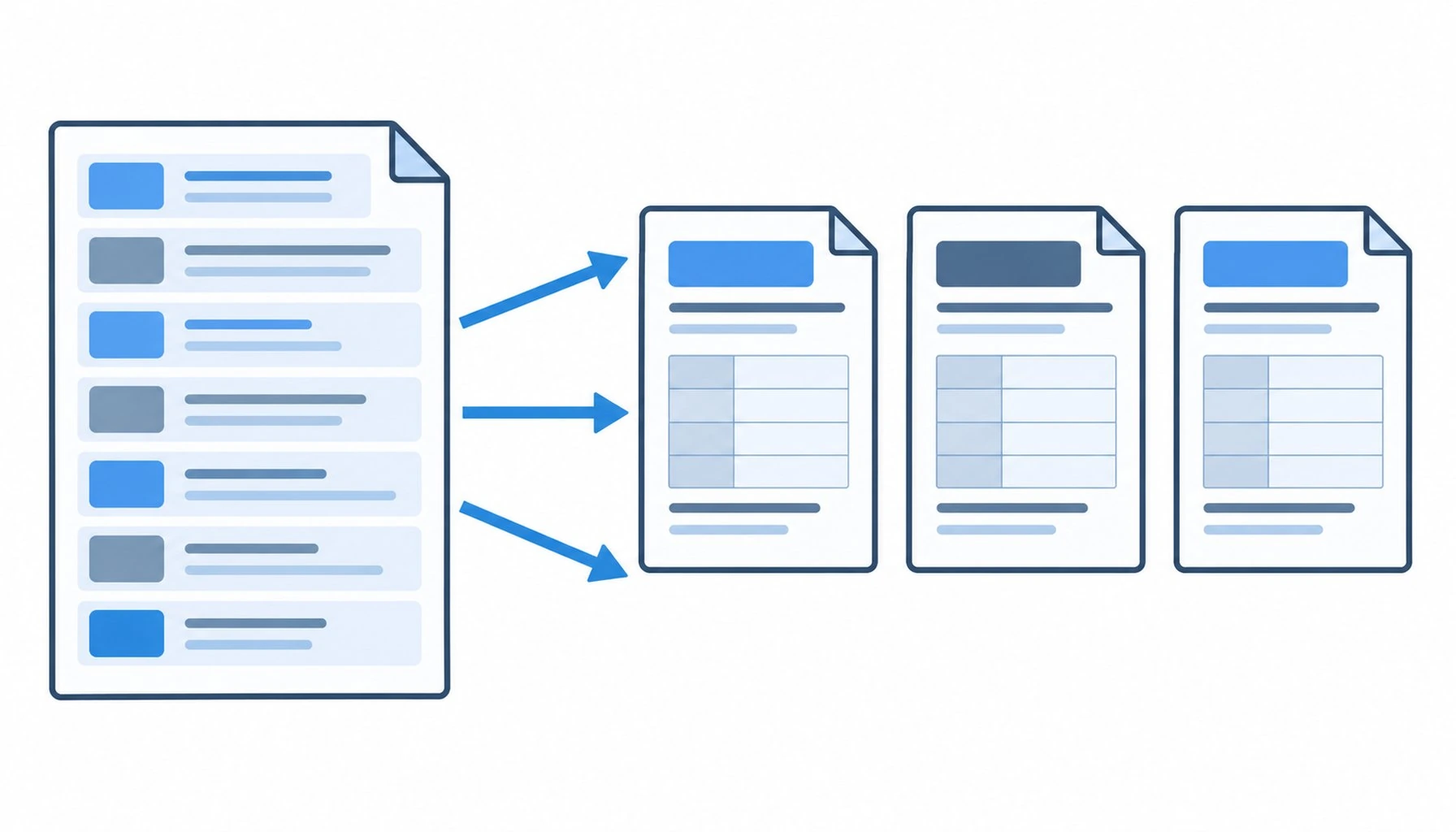
Table 1 assembles the template as it should be sent, block by block, with the pattern line and the failure each one prevents. The comparison format at the bottom is what turns answers into a decision: attach the sheet, and ask for one line per item with no alternatives. The checklist for judging the answers line by line is set out in our note on comparing cable quotations in the region, with the general version in our guide to comparing cable quotes beyond price per meter.
| Block | Pattern Line | What It Prevents |
|---|---|---|
| Header | "Project [name], [city]. DAP [city], Incoterms 2020. Validity 30 days." | Prices built to different destinations |
| Specification | "0.6/1 kV, Cu/XLPE/PVC, 4x95, IEC 60502-1, black, per Schedule A." | Quiet re-interpretation of constructions |
| Quantity | "[12,000] m on [500] m drums, [3]% spare, packing per [standard]." | Drum plans built for the supplier |
| Evidence | "Attach type-test report, routine certificate, licence, passport per drum." | Acceptance argued on site |
| Money | "USD, copper basis [index] [date], 30/70, valid 30 days." | Quotes that cannot be compared |
The Wording Freeze List
Table 2 is the shorter list to check before any enquiry leaves the building, because these seven lines are the difference between answers and guesses.
| Item to Freeze | How to Write It | Evidence to Attach | Cost of Leaving It Blank |
|---|---|---|---|
| Destination basis | DAP city named, Incoterms year stated | Quote line showing the basis | Freight guessed into the price |
| Spec reference | IEC construction plus listed deviations | Type-test report | Five cables answering one RFQ |
| Drum plan | Length per drum, packing standard named | Packing specification | Drums that cannot transit |
| Validity | Days from quote date, copper trigger | Basis clause in the quote | Stale prices at award |
| Payment line | Instrument and stages stated | Agreed term sheet | Cash and order stuck together |
| Evidence list | Documents named per item | Report and licence copies | A silence from good factories |
| Answer format | Quotation sheet attached | Filled sheet returned | Comparison by re-typing |
When a Short Enquiry Is Not the Answer
When the first question is price per meter. Price without a basis, a destination and a construction is a number that means nothing. The suppliers who answer it fastest are the ones who thought about it least, and the discount that attracted the enquiry dissolves the moment the real specification lands.
When the BOQ is pasted raw. A bill of quantities written for a design office is not an enquiry. Without terms, drums and evidence lines, it transfers every open decision to the supplier’s imagination.
When validity is left open. Copper does not wait. A quote without a window and a basis trigger expires in transit, and the negotiation that follows starts from the stale number.
When evidence is described as “as per standard”. Standards define tests, not the paperwork you will receive. Name the documents, or the gap surfaces at acceptance with drums already paid for, and the only party with leverage then is the supplier who knows it.
When every supplier answers in a different format. Unstructured answers are not comparable, and non-comparable answers make the decision feel random. Attach the sheet; the format is part of the question.
RFQ Checklist
- Project, city and consignee named; DAP basis with Incoterms year
- Each item written as a construction sentence with a schedule reference
- Dual reference given where a local requirement applies
- Drum length, spare percentage and packing standard stated
- Delivery calendar with milestones and the winter window respected
- Unloading responsibility and lifting points stated
- Evidence list: type test, routine certificate, licence, passport per drum
- Currency, copper basis with formula, and validity window in the money block
- Payment instrument and stages stated, not left to the supplier
- Quotation sheet attached, one line per item, no alternatives
Conclusion
An RFQ that answers well is mostly a matter of finishing your own sentences: destination, construction, drums, calendar, evidence, money, format. None of it is difficult, and all of it is cheaper to write than to discover. The template lines above are deliberately plain, because plain lines survive translation, time zones and copper volatility better than clever ones. Attach the sheet, name the evidence, put the basis in every price, and the answers will line up for the comparison instead of against it.
Kexingyu Cable Group (KXYE) answers RFQs written exactly this way, with the evidence file attached and the copper basis stated up front. Send the enquiry sheet and the delivery calendar. A request for quotation is the fastest start.