
Greenhouse and Controlled-Agriculture Cable in Central Asia
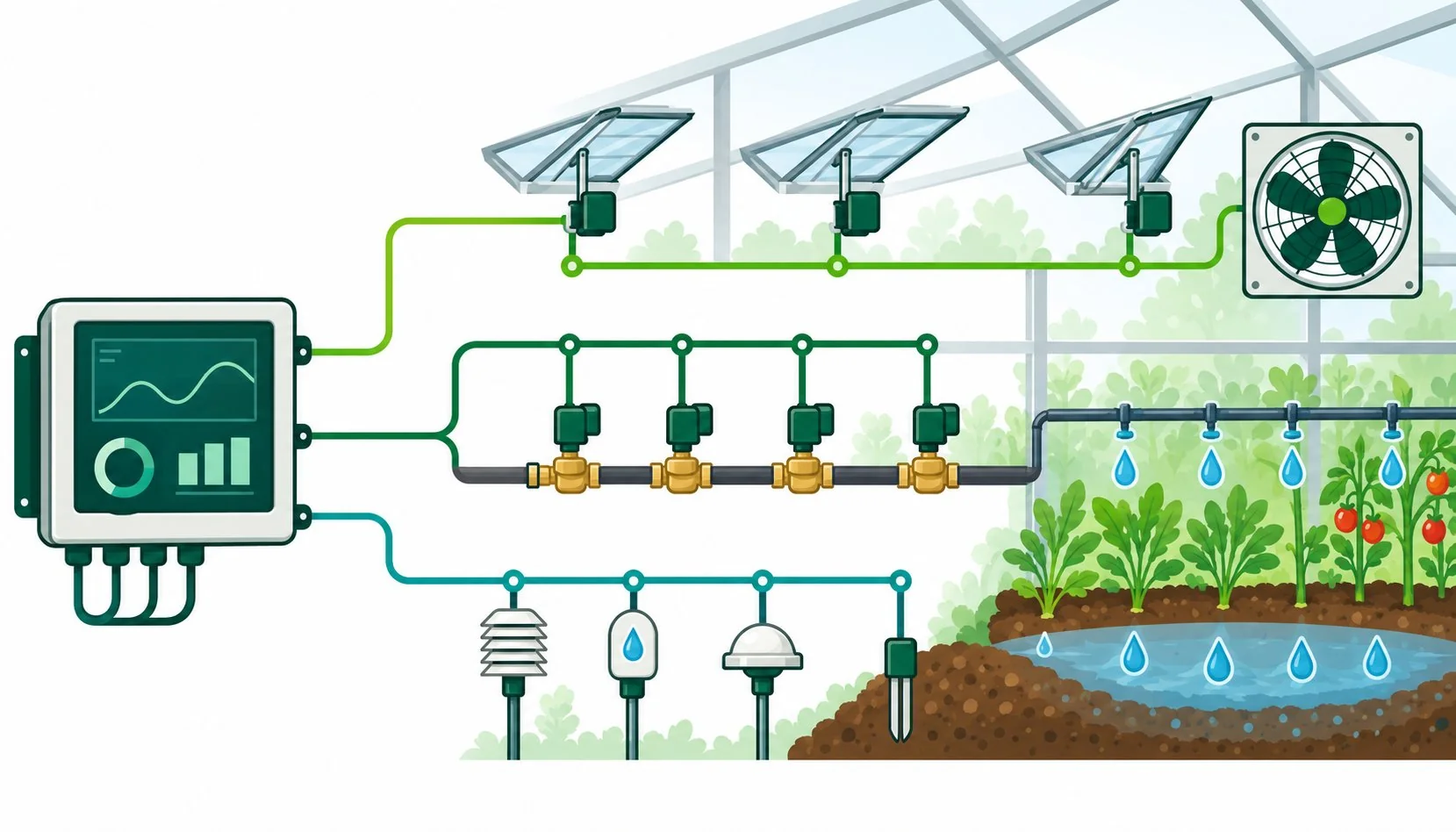
Quick Answer: A greenhouse is a corrosive wet room that grows a crop, and its cable is specified for the room, not for the field outside. Constant humidity, fertigation mist and washdown attack sheaths, glands and enclosures in ways dry buildings never see, while the climate computer multiplies the control and sensor circuits. Keep power and control segregated, choose compounds for the wet, and plan the cable routes for the expansion that every greenhouse eventually orders.
Introduction
This page covers the cable side of greenhouse and controlled-agriculture projects in the region: how the circuits divide, what humidity and fertigation do to materials, where washdown and wet zones tighten the specification, and what to freeze in an RFQ so the installation survives both the crop cycle and the next expansion phase. It is written for the integrator, the farm operator and the EPC buying the cable.
The regional buying context sits in our Central Asian cable buying hub. Our note on agricultural robot cable covers the machines that move through the same houses; this page stays with the fixed plant they plug into, which fails for different reasons and is maintained by different hands.
Why Greenhouse Duty Differs from Field and Factory
The climate is the first difference. Inside the house, relative humidity runs high around the clock, and condensation forms on every surface that crosses a gradient, including cable run along cold gutters at dawn. Nothing in an outdoor specification prepares a buyer for a room wet from the air rather than the weather.
The water is the second difference, and it is worse than plain water. Irrigation and fertigation lines carry dissolved fertiliser that mists, drips and evaporates onto anything below or beside the nozzle, and the residue is hygroscopic and mildly corrosive. Cable run through a wet zone ages by chemistry, not just by moisture, and the chemistry concentrates exactly where the crop is worth the most.
The third difference is growth. Greenhouses expand bay by bay, controllers gain sensors season by season, and the wiring installed for year one is extended in year three by a crew that did not install it. A specification that ignores expansion produces the tangle every older house hides in its gutters, and avoiding it costs planning, not copper.
Mapping the Circuits: Power, Climate and Sensors
The electrical system divides into three layers. The power layer feeds the heavy equipment: pad-mounted supply, distribution boards, irrigation pumps, pad fans, boiler houses and, where they exist, supplementary lighting circuits. The climate layer carries the controlled circuits between the climate computer and its actuators: vents, screens, valves, curtains and dosing equipment. The sensor layer carries the small signals the computer listens to.
The layers have different owners and different failure economics. Power faults stop the house and are noticed instantly; sensor faults are quiet and expensive, because a drifting temperature reading can steer a whole house for days before anyone doubts the number. The sensor layer therefore buys its discipline, in shielding, segregation and spare cores, at a price that looks absurd per metre and is cheap per season.
Mapping the layers also fixes the evidence. The power layer carries the standard LV test and certification file; the climate and sensor layers carry screening and segregation records instead, plus the controller manufacturer’s wiring requirements. Table 1 lines the three layers up against construction and the evidence that matters, and Table 2 turns the decisions into order lines before the enquiry goes out.
Humidity, Fertigation and the Corrosion Question
Materials decide how a house ages. Sheaths, cable glands, tray coatings and enclosure ratings are chosen against condensation and fertiliser mist together, and the comparison of the common sheath compounds, and what each survives, is set out in our note on cable sheath materials compared. The short rule: the compound is chosen for the wet zone it actually crosses, not for the driest corner of the route.
The salt spray literature transfers more than buyers expect, because coastal corrosion and fertiliser mist attack through the same mechanisms: moisture films on surfaces, chlorides and nutrients in the film, and time. The test logic behind coastal specification is described in our note on coastal salt spray cable, and it is the nearest controlled-environment analogue to what a fertigation line does to its surroundings.
Condensation is the quieter half of the problem, because it forms inside equipment and circuits, not only on them. The behaviour, the inspection habits and the design answers are set out in our note on wet sites and cable condensation, and the greenhouse version of it is simple: a cable that runs from a cold service corridor into a warm wet house carries the gradient with it, and the gland is where the gradient settles.
Wet Areas, Washdown and Protection Discipline
Zoning comes first in the installation standard. The house divides into dry zones, splash zones and washdown zones, and each has its own minimum: standard practice in the dry, protected routing in the splash, and rated constructions with sealed terminations in the washdown. The zones are drawn once, on the layout the irrigation designer already has, so the cable plan and the nozzle plan agree.
Routing is the cheapest protection available. Cable runs high along gutters and structure, crosses nozzles and walkways, drops to equipment through protected drops, and never uses the floor as a raceway. Where cable must pass through wet zones, conduit and sealed glands carry the rating that the cable alone would not, and every transition is treated as a place where water will eventually try to travel.
The closest engineering analogue to this environment, in published discipline, is the tropical data hall, where humidity, condensation and corrosion are managed as a system rather than as a coating choice; the method is set out in our note on tropical data centers and corrosion. Greenhouse integrators who borrow its inspection rhythm catch sheath and gland problems in months instead of seasons.
Control Layers: Climate Computer, Valves and Monitoring
The climate computer is the house’s brain, and its wiring decides whether the house is run or merely watched. Actuator circuits to vents, screens and valves, dosing pumps and fan controls all radiate from the controller cabinet, and the structured way to build that star is described in our note on BMS control cable, which faces the same integration job in buildings.
Segregation and shielding are the specification core. Power runs and signal runs keep their distance or their barriers, screens are earthed per the controller maker’s instructions and not improvised per crew habit, and the sensor pairs keep away from the drives and contactors that share the cabinet. A house that ignores this runs for years with phantom faults that no one can trace and everyone learns to ignore.
Spare cores are the quiet investment that pays at the first retrofit. Every actuator added later, every sensor moved as the crop changes, lands on cores that already run the route, and the marginal cost of those cores at installation is a rounding error against pulling new cable through a cropped house. The spare core schedule belongs in the RFQ, by route, not in a drawer.
Installation Routes: Gutters, Trenches and Phases
Installation happens around a crop and a season, and the sequence is a procurement input. Power and backbone routes go in during the construction phase, before gutters and benches arrive; the actuator and sensor layers follow house by house as the climate system is commissioned. Cable ordered by phase arrives when the route exists, instead of standing in a container growing older than its warranty clock.
The routes themselves are simple if they are drawn once. Backbone along the central gutter or service corridor, laterals along the structural lines, drops to equipment at fixed points, and a spare conduit per backbone for the phase nobody has funded yet. Older houses that skipped this now carry their history in the gutters, and every retrofit starts with an archaeology pass.
Documentation is what keeps the next crew from repeating the archaeology: as-built routes, labelled cores, and a schedule of which spare cores serve which route, handed over with the house. In a greenhouse that file is what makes year three’s expansion a quote instead of a survey.
Buying and Expanding: Spares, Stages and Markets
The buying question in this sector is usually volume, not specification. House builders buy in programmes, and the cable lines repeat across bays; the wholesale and stock route for the region is described in our note on wholesale building wire in Uzbekistan, and programme pricing beats project pricing wherever the schedule is honest about the repeat.
Spares are short: a drum of the power size that feeds a bay, a stock of the sensor and actuator cable that the controller family uses, glands and boxes for the wet zones, and a labelled tray of cores left in the routes for next season. The RFQ discipline that keeps a package like this comparable is the one in our note on the industrial cable RFQ checklist, adapted to a repeating schedule.
Country sourcing for the region is covered in our notes on buying power cable for Uzbekistan and the neighbouring guides, and the same comparison rule holds: one envelope of construction, tests, lengths and phase delivery, against which every offer is read. Table 2 is the freeze list that builds that envelope before the first offer lands.
The Greenhouse Circuit Map
Table 1 lines up the three circuit layers of a greenhouse against construction, the governing input and the evidence that matters.
| Circuit Layer | Typical Construction | Governing Input | Evidence to Demand |
|---|---|---|---|
| Power | Standard LV cable, rated drops in wet zones | Equipment loads and zoning plan | Routine tests, zone-rated terminations |
| Climate control | Shielded multicore to actuators | Controller wiring requirements | Segregation and screening records |
| Sensors | Shielded pairs, spare cores per route | Signal integrity in the wet | Core schedule and test sheet per route |
| Wet zone runs | Conduit, sealed glands, rated sheaths | Fertigation mist and washdown | Compound and gland rating statements |
| Backbone and spares | Routes with labelled spare cores | Expansion phases already planned | As-built core schedule |
The Greenhouse RFQ Freeze List
Table 2 is what to settle before the enquiry goes out, because these lines decide whether the installation survives its third season.
| Item to Freeze | How to Write It | Evidence to Attach | Cost of Leaving It Blank |
|---|---|---|---|
| Zoning plan | Dry, splash and washdown zones drawn | Layout shared with irrigation design | One standard for three different rooms |
| Wet zone standard | Sheath compound and gland rating per zone | Compound and rating statements | Corrosion blamed on the crop |
| Segregation rules | Power versus signal distances and barriers | Controller maker's wiring manual | Phantom faults nobody can trace |
| Spare cores | Count per route, labelled at both ends | Core schedule per backbone | New cable pulled through a cropped house |
| Route plan | Backbone, laterals and drops drawn once | Layout with routing marked | History stored in the gutters |
| Phase delivery | Drums staged to construction sequence | Build schedule per house | Stock ageing in a container |
| Handover file | As-builts, labels and test records | Handover format agreed early | Expansion that starts with a survey |
When Treating a Greenhouse Like a Warehouse Is Not the Answer
When the sheath is chosen for the climate outside. The house is wetter than the steppe it stands in, and the compound that shrugs at outdoor weather still collects condensation and fertiliser film inside. The wet zone the cable actually crosses decides the specification, and the zones are on the irrigation plan, not the site plan.
When power and sensor cable share a route out of habit. A drifting sensor in a greenhouse costs a season of quietly wrong decisions before anyone doubts the reading. Segregation and shielding are bought at installation, where they are cheap, and re-bought at troubleshooting, where they are not.
When spare cores are skipped to save a rounding. Greenhouses expand; that is what they are for. Cores left in the route at construction serve every later actuator and sensor, and their absence is paid in cable pulled through a full house at harvest prices.
When the handover file is optional. The next crew extends what this crew labelled. Without as-builts and a core schedule, every expansion begins with an archaeology pass through the gutters, and every fault begins with the same question: where does this actually go.
When the phase plan is left to the supplier. Cable delivered for a four-phase project in one shipment stands and ages through the phases it was bought for. Staging drums to the build sequence is a procurement line, and the only cost of writing it down is losing the argument about whose container that was.
RFQ Checklist
- Zoning plan drawn: dry, splash and washdown, shared with the irrigation design
- Sheath compound and gland rating stated per zone
- Segregation distances and screening earthing per the controller manual
- Sensor and actuator cable schedule with spare cores per route
- Route plan drawn once: backbone, laterals, drops, spare conduit
- Phase delivery keyed to the construction sequence per house
- Handover file format agreed: as-builts, labels, test records
- Spares list: bay power drum, controller cable stock, glands, boxes
- Programme pricing requested against the honest repeat schedule
- Comparison on one envelope: construction, tests, lengths, phase delivery
Conclusion
Greenhouse cable is specified for a wet, corrosive, expanding room. Compounds follow the fertigation zones, segregation follows the climate computer, spare cores follow the growth plan, and the handover file follows all of them into year three. A package written that way is quotable per bay and extensible by design; one written for a dry building is a slow claim against every season that follows.
Kexingyu Cable Group (KXYE) supplies greenhouse programmes with power, control and sensor lines in one schedule, zoned for the wet and phased to the build. Send the house layout and the controller family. A request for quotation is the fastest start.
Recent Posts
Измерительные и контрольные кабели для Казахстана: решение для промышленных закупщиков, подрядчиков и дистрибьюторов
Измерительные и контрольные кабели для Казахстана: решение для промышленных закупщиков, подрядчиков и дистрибьюторов Коротко о главном: кабель управления передаёт команды и сигналы переключения — пуск
Dây dẫn xây dựng BV/BVR cho Việt Nam: Giải pháp cho nhà phân phối, nhà thầu và đơn vị thu mua
Dây dẫn xây dựng BV/BVR cho Việt Nam: Giải pháp cho nhà phân phối, nhà thầu và đơn vị thu mua Trả lời nhanh: Với