Mining Cable Suppliers for Kazakhstan: How to Evaluate a Quote
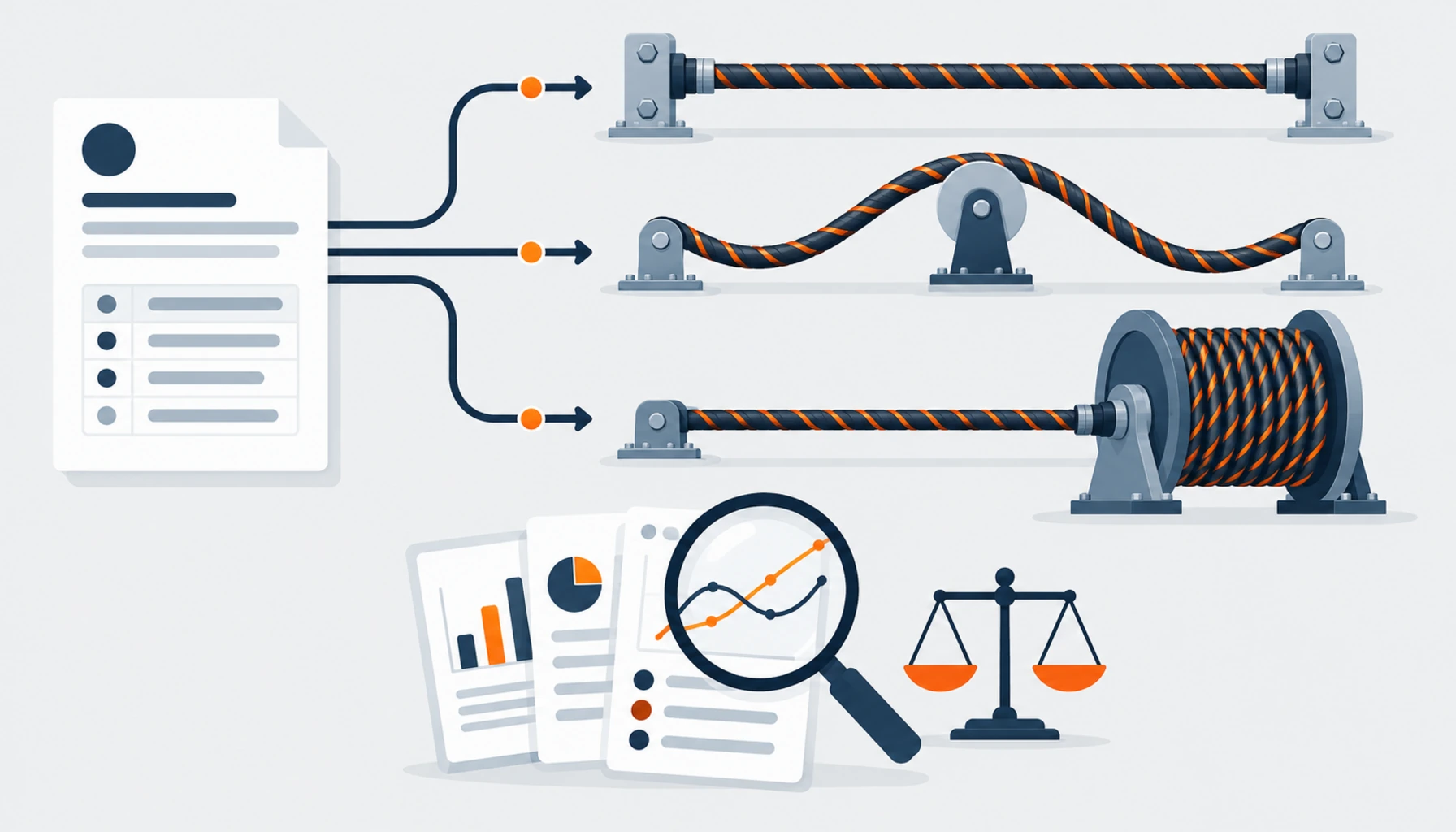
Quick Answer: Mining cable quotes for Kazakhstan differ most in what they leave out, so evaluation is the discipline of making the invisible parts visible. A quote earns attention when it names the duty it is built for, fixed, trailing or reeling, answers the machine’s motion parameters with construction choices, and attaches evidence: sample test plans, batch reports and type reports scoped to the actual cable. A quote that prices a construction without evidencing it is transferring risk to the buyer at a discount. This guide sets out how a mine’s procurement team reads a supplier’s quote line by line, from duty separation through earthing and sample testing to the deviation list that decides whether the award is safe.
Introduction
Cable is a small line in a mine’s budget and one of the largest in its downtime ledger. When a shovel’s trailing cable fails mid-shift, the machine stops, the crew waits, and the cost of the cable’s price difference is recovered, or lost, within hours. That arithmetic is why mining cable procurement in Kazakhstan is less about finding the lowest quote and more about finding the quote whose construction and evidence survive contact with the pit.
This guide is written for mine procurement teams, maintenance engineers and their EPC counterparts buying mining cable for Kazakh operations. It follows the evaluation of a supplier quote: separating duty cycles, putting motion parameters into the RFQ, reading the offered construction against bending, tension and abrasion, checking earthing and protective elements, arranging sample tests, and weighing the delivery evidence and deviations attached to the price. The supplier prequalification that precedes a quote is covered in the Kazakhstan procurement checklist in this series, and the general method for weighing offers side by side is set out in our quotation comparison guide. The construction fundamentals behind these products are introduced in our mining cable buying guide.
Separate the Duty Cycles Before Reading Any Price
Fixed, trailing and reeling duty are different products. Fixed installations want armoured constructions selected for mechanical protection and bedded in place; trailing cables live on mobile machines and bend all day; reeling cables wind and unwind on drums thousands of times over their lives. A supplier who quotes one generic “mining cable” across all three has not understood the enquiry, and the price on such a quote is not comparable to a price that respects the split.
Each duty has its own failure mode and therefore its own evaluation focus. Fixed cable fails by external damage, so armour and location matter most. Trailing cable fails by bending fatigue, abrasion and crush, so conductor compaction, insulation flexibility and sheath compound matter most. Reeling cable adds tension and torsion to the same list. The evaluation table later in this guide assigns the enquiry parameters and evidence to each duty so the comparison stays honest.
The duty split also disciplines the bidder list. Suppliers strong in fixed armoured power cable are not automatically strong in reeling constructions, and the reverse. Asking each bidder to state, per line, which duty they are quoting and on what production route, lets the mine weight the quotes by relevance instead of by price alone.
Put the Machine's Motion Parameters in the RFQ
Motion parameters decide construction, so they belong in the enquiry. Minimum bending radius on the machine, drum diameter, travel speed, torsion from rotation, ambient temperature range at the pit, and the reel duty cycle: these are the inputs from which a competent supplier derives conductor class, insulation type, sheath compound and strain relief. An RFQ that carries them gets constructions quoted to purpose; an RFQ that carries only voltage and size gets constructions quoted to catalogue.
Ambient and seasonal extremes are Kazakh specifics. Winter pit temperatures and summer surface heat both act on the sheath, and installation at low temperature is a separate, harsher condition than operation at it. The RFQ should state both, and the evaluation should check that the quoted sheath and insulation compounds are stated for both conditions rather than for a single laboratory point. The selection logic for matching cable class to site temperature reality is set out in our note on temperature class and site conditions.
Ask the bidder to show the derivation. A quote that says “suitable for your machine” asserts; a quote that walks from the stated bending radius to a compacted class conductor and a specified minimum sheath thickness demonstrates. The demonstration is what makes competing quotes comparable, because it exposes which supplier actually engineered the line and which one copied it.
Read the Offered Construction Against the Duty
Bending and flexing live in the conductor. For trailing and reeling duty, class 5 or class 6 flexible conductors, properly compacted, are the difference between a cable that flexes and one that works hardens. The evaluation checks that the quote names the conductor class, not just the cross-section, and that the insulation chosen suits repeated flexing rather than only the voltage.
Tension and abrasion live in the sheath and the reinforcement. Reeling and trailing constructions carry their mechanical load in the sheath compound, in textile or metallic reinforcement where specified, and in the grip the termination detail provides. A sheath chosen only for oil or weather resistance, however good its compound, is not a substitute for the mechanical grade the duty needs, and the quote should name the compound and its role explicitly.
Armour is a fixed-duty answer, not a universal one. For fixed runs, steel wire armour selected against the mechanical threat is the right construction, and the choice between armoured and unarmoured solutions is an engineering decision per route, set out in our note on armoured versus unarmoured cable and the armour selection logic in our steel wire armour guide. A trailing cable with armour where the machine needs flexibility is a misapplication wearing a serious expression.
Check Earthing and Protective Elements as Quoted Items
Earthing is a construction line, not an assumption. Mining cable typically carries earth conductors, and the evaluation confirms their count, cross-section and arrangement in the quoted construction, pilot cores where the machine control needs them, and the screen arrangement where interference or fault detection requires it. Quotes that leave earthing to “standard construction” leave the mine’s protection philosophy to the factory’s defaults.
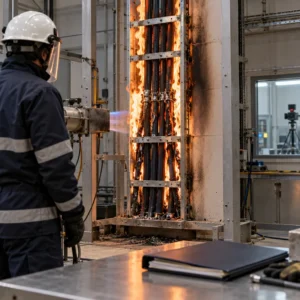
Flame retardant and antistatic properties are specified properties. Where the operation’s rules require flame retardance or antistatic sheath behaviour, the quote should state which property the construction carries and on what evidence, because these are tested characteristics of specific compounds, not adjectives that attach to any rubber sheath. The distinction between the two requirements and their evidence is set out in our note on flame retardant and antistatic requirements.
A rubber sheath is not a mining qualification. This is the evaluation point that saves the most money: a general-purpose heavy rubber cable, or an oil-resistant one, may look superficially similar to a mining trailing cable, but qualification for mining service comes from construction for the duty and evidence for the specified properties, not from the family resemblance. The evaluation treats any claim of mining suitability without duty-specific evidence as a deviation to be resolved, not a detail to be waived.
Arrange Sample Tests on the Actual Construction
Samples test the line that will be produced, not a cousin of it. For each quoted construction, the evaluation includes a sample plan: samples drawn from the production route, tested for the properties the duty stresses, flexing endurance where the machine bends, tensile and abrasion on the sheath, insulation and earthing continuity. The approval workflow from sample submission through sealed reference is set out in our note on the sample approval process.
Machine-class constructions justify pilot tests on real duty. For a new trailing or reeling supply, a pilot length running on the actual machine or reel, observed through a defined period, answers questions no laboratory test poses. Where the quoted supplier offers this, the offer is a positive evaluation signal; where the supplier resists it, the resistance is information too.
Sample results belong in the award file. Whatever the samples show, the sealed references and results become part of the order’s evidence chain, the baseline against which production batches are later compared. An evaluation that ignores this handover buys twice: once for the quote, once for the traceability it failed to secure.
Weigh Delivery Evidence and Deviations, Then the Price
Evidence is part of the offer, priced into it or absent from it. Type reports scoped to the quoted construction, routine batch test commitments tied to drum numbers, and packing and marking agreements are the documents that make a mining supply supportable. Reading a type report properly, checking that its construction, standard and date match the line it supports, is a skill with a method, set out in our note on the type test report review.
Deviations are where quotes hide their differences. Two quotes at similar prices may differ in conductor class, sheath compound, earth arrangement or test scope, and the deviation list is where those differences surface. The evaluation requires each bidder to list deviations from the RFQ specification explicitly, then prices the deviations: a cheaper quote with a material deviation is often the more expensive supply once the duty is counted.
Acceptance planning completes the evaluation. Delivery acceptance for mining constructions, what is checked at receipt and against which documents, should be agreed before the award, because it is the last point at which the buyer’s requirements are cheap to write and the supplier’s commitments are cheap to give. The acceptance practice for mining cable is set out in our note on mining cable acceptance testing, and the reel-side wear factors that shorten or lengthen service life are covered in our note on trailing cable and reel life.
The Quote Evaluation Table: Duty, Enquiry Parameters, Evidence
The table is the working sheet for evaluating mining cable quotes: for each duty, the parameters the RFQ must state, the construction answers to expect in the quote, and the evidence that supports them.
| Duty | Enquiry Parameters the RFQ States | Construction Answers to Expect | Evidence to Require |
|---|---|---|---|
| Fixed installation | Route and installation method, mechanical threat, ambient range, voltage and load | Armoured construction with armour type selected per threat; sheath per environment; earthing per design | Type report naming the construction; batch routine tests; installation and termination guidance |
| Trailing, mobile machines | Minimum bending radius, travel and articulation, crush and drag exposure, ambient and seasonal range | Class 5 or 6 flexible conductors, flexing insulation, heavy duty sheath compound, earth and pilot cores | Flexing and sheath test evidence; sample from the production route; sealed sample reference |
| Reeling, drum duty | Drum diameter, winding cycles, tension, torsion, speed, ambient range | High-flex conductor class, torsion-balanced element arrangement where rotation applies, reinforced sheath, strain relief detail | Reeling endurance evidence; pilot length on the actual reel; batch reports tied to drum numbers |
| Every line | Duty named per line; properties required by the operation's rules stated as testable properties | Flame retardant or antistatic behaviour evidenced per compound where required; earthing counted and sized | Deviation list per bid; acceptance criteria agreed before award; claims route in the order |
Cost and Lead Time in Mining Cable Quotes
Price differences between quotes are mostly construction differences. Flexible conductor classes, mechanical-grade sheath compounds and reinforcement cost real money, and a quote materially below the others usually reflects one of these quietly lightened. The evaluation prices the construction, not the number, and asks the low bidder to identify what the others included that it did not.
Downtime is the denominator the price is divided by. A trailing cable that lasts a season and one that lasts three are different products at any price, and the machine hours between them dwarf the quote gap. Where operating data from the mine’s own history exists, feeding it into the evaluation, expected life per quoted construction against the mine’s duty, turns the comparison from purchasing into engineering.
Lead time for mining constructions follows the production plan. Duty-specific constructions are made to order, and the slot, the sample round and the pilot test each carry calendar weight. The evaluation should compare quoted lead times on the same scope, sample plus production plus documents, because scopes quoted differently are dates that cannot be compared.
Framework supply beats transaction buying for recurring duty. Mines consume trailing and reeling cable continuously, and a framework that fixes construction, evidence and price adjustment for a period converts repeated emergencies into scheduled orders. The path from a first order to that arrangement is set out in our note on RFQ to framework agreement.
| Signal in the Quote | Why It Matters | Question and Evidence That Resolves It |
|---|---|---|
| One generic construction quoted across fixed, trailing and reeling lines | Duty-specific constructions differ fundamentally; a generic quote is a catalogue price, not an engineered offer | Ask the bidder to re-quote per duty; expect constructions and evidence that differ by line |
| Conductor class not stated for a flexing duty | Bending life lives in the conductor class and compaction, not in the cross-section | Require the conductor class per line and its basis against the stated bending radius |
| Mining suitability implied by rubber sheath or oil resistance alone | Sheath family resemblance is not duty qualification; the properties that matter are tested ones | Require property-level evidence for each claimed characteristic, per the operation's rules |
| No deviation list provided | Differences from the RFQ exist in every real quote; silence conceals them | Require an explicit deviation list; treat refusal as a material evaluation finding |
| Type reports attached without scope matching | A report for a different construction or date supports nothing | Check each report's construction, standard and date against the quoted line before weighting the offer |
When the Lowest Mining Cable Quote Is Not the Answer
When the quote cannot name its construction. A price without a construction behind it is a promise to negotiate after the award, and the mine holds no leverage then. Send the enquiry back.
When the duty is new to the supplier. First reeling or trailing supplies justify a pilot phase with smaller volumes and closer observation, however good the quote looks, and the evaluation should price the pilot in rather than hope it away.
When the mine’s rules require properties the bid does not evidence. Where flame retardance, antistatic behaviour or other specified properties are required by the operation, unevidenced claims are disqualifying at evaluation, not negotiable at delivery.
When the price gap survives every question. Occasionally a low quote is genuine, a new line seeking references, a stock lot matching the specification exactly. The evaluation proves it rather than assumes it: construction named, evidence attached, deviations listed, samples tested. Proven cheap is cheap; assumed cheap is a claim on the mine’s future downtime.
RFQ Checklist
- Duty named per line: fixed, trailing or reeling, with the machine parameters attached
- Motion parameters in the RFQ: bending radius, drum diameter, tension, torsion, speed, seasonal ambient range
- Conductor class required per flexing line, not just cross-section
- Sheath compound and reinforcement named per duty, with role stated
- Armour selected per route for fixed lines, not assumed across the order
- Earthing and pilot cores counted and sized in the quoted construction
- Required properties stated as testable properties, with evidence demanded per claim
- Sample plan per construction: production-route samples, sealed references, pilot length for new duty
- Type reports scope-checked per line; routine batch tests tied to drum numbers
- Deviation list required from every bidder and priced before the award
Conclusion
Evaluating mining cable quotes for Kazakhstan is the discipline of refusing to let a price substitute for a construction. The quote is read against the duty the machine imposes: bending and tension answered in the conductor and sheath, protection answered in the armour and earthing, required properties answered in evidence rather than adjectives, and every deviation surfaced and priced before the award. Suppliers who document their engineering welcome the method; the others discount for a reason.
Kexingyu Cable Group (KXYE) manufactures mining and heavy duty constructions in Quanzhou and quotes Kazakh mining enquiries line by line: duty named, motion parameters engineered into the construction, samples from the production route, and batch evidence tied to drum numbers. Send us your machine parameters, quantities and destination, or upload your BOQ and technical specification, and we will quote against the duty, not the catalogue. A request for quotation is the fastest route to start.