
How Much Copper Does an AI Data Center Use? The Numbers Behind the Buildout
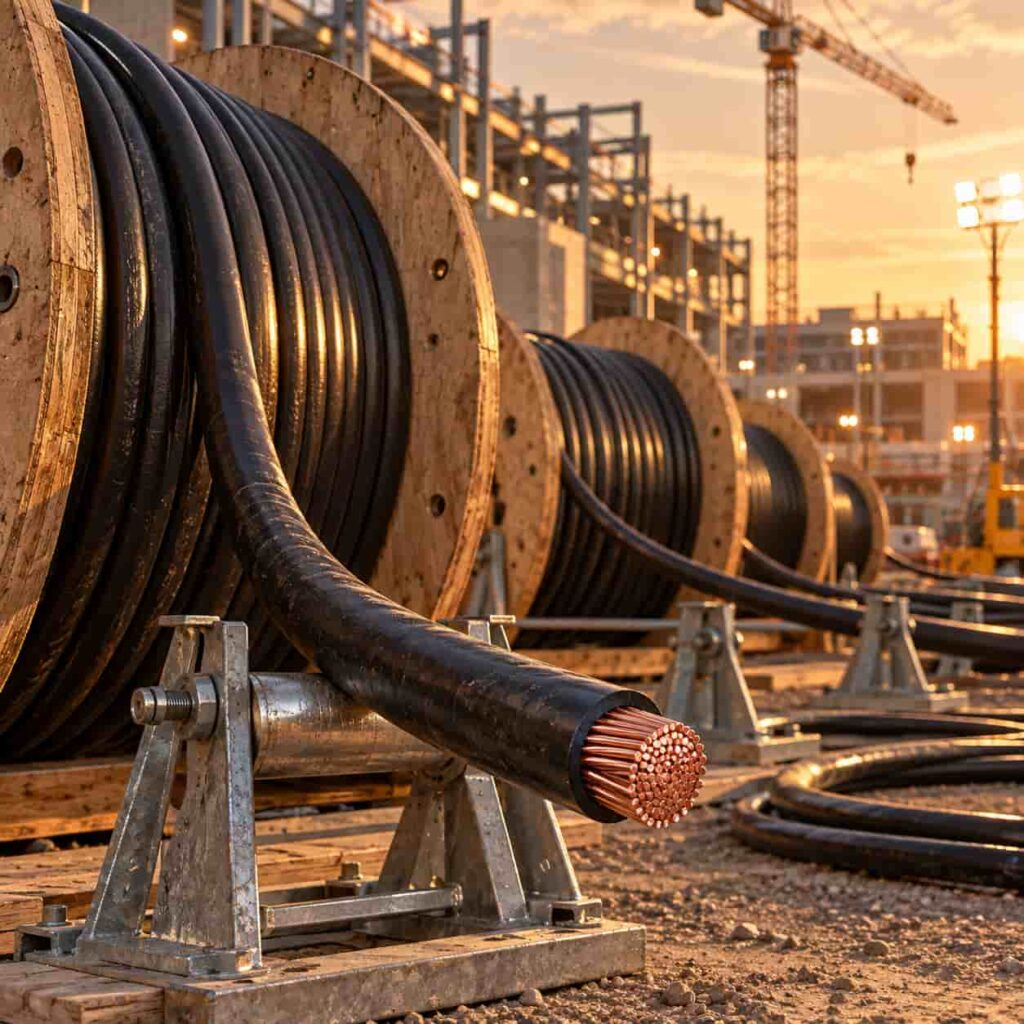
How Much Copper Does an AI Data Center Use? The Numbers Behind the Buildout Quick Answer: Plan on one to five tonnes of copper per delivered megawatt — and because copper dominates cable cost, AI-era buildouts turn a technical detail into a commodity market story. Every conversation about AI infrastructure eventually arrives at the same […]
A/B Redundant Feeds: Cable Redundancy Design for Data Centers
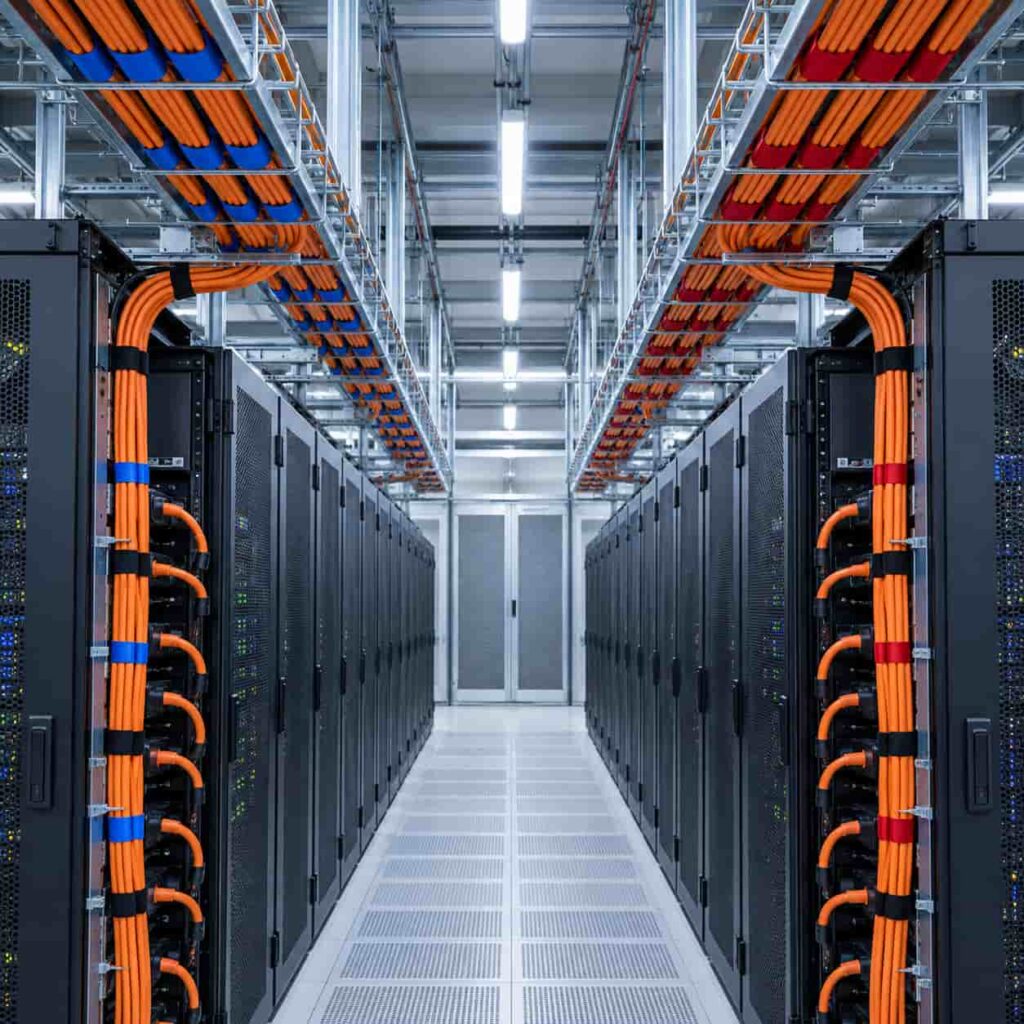
A/B Redundant Feeds: Cable Redundancy Design for Data Centers Quick Answer: A/B redundancy is only as real as the physical separation of the two cable routes — dual paths from different switchboards that never share a fire zone or failure point. Every data center single-line diagram shows two feeds to every critical load. The diagram […]
415V/240V Distribution: Why AI Data Centers Run at Higher Voltage
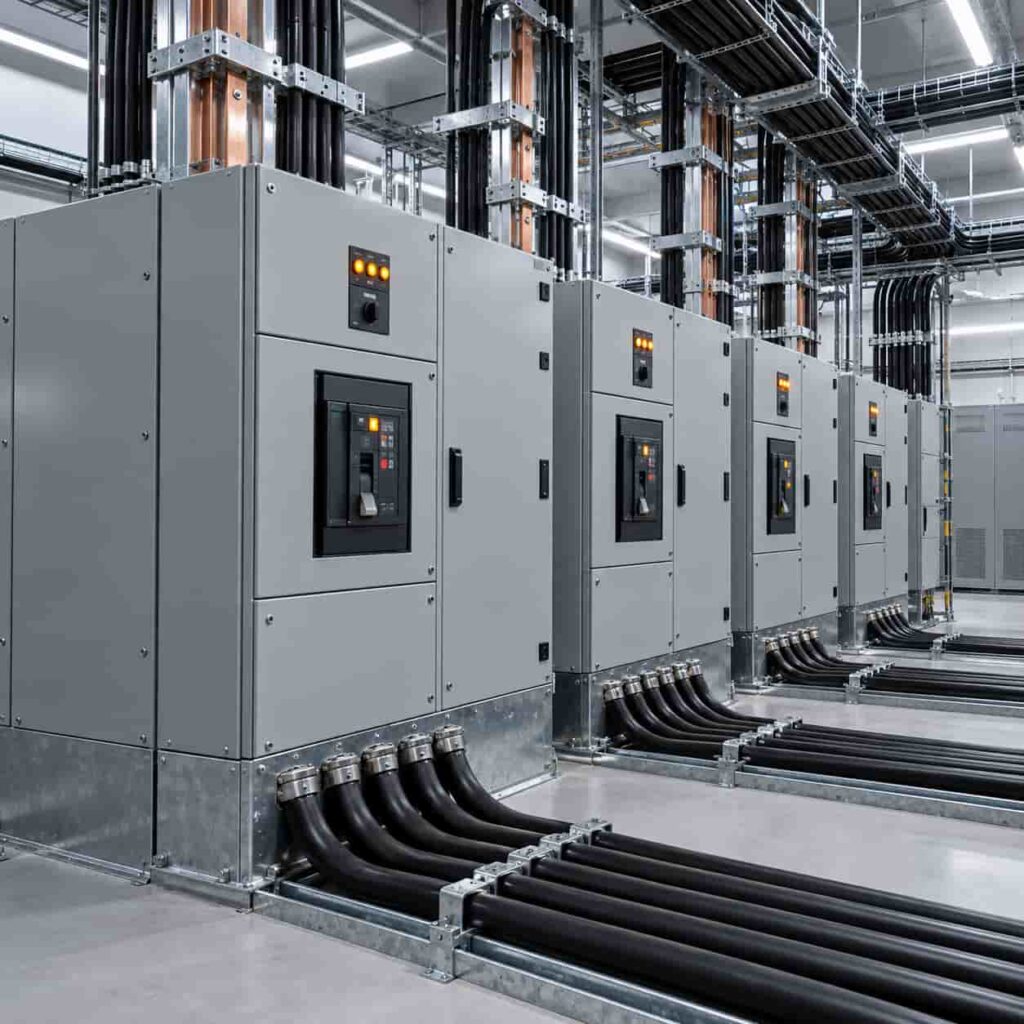
415V/240V Distribution: Why AI Data Centers Run at Higher Voltage Quick Answer: Raising distribution voltage cuts current per rack, allowing smaller copper cross-sections and fewer parallel sets — which is why AI-era facilities keep pushing voltage up. Voltage is a lever, and distribution designers have been pulling it for a century: the higher the voltage, […]
Generator-to-ATS Cable Connections: Backup Power Done Right
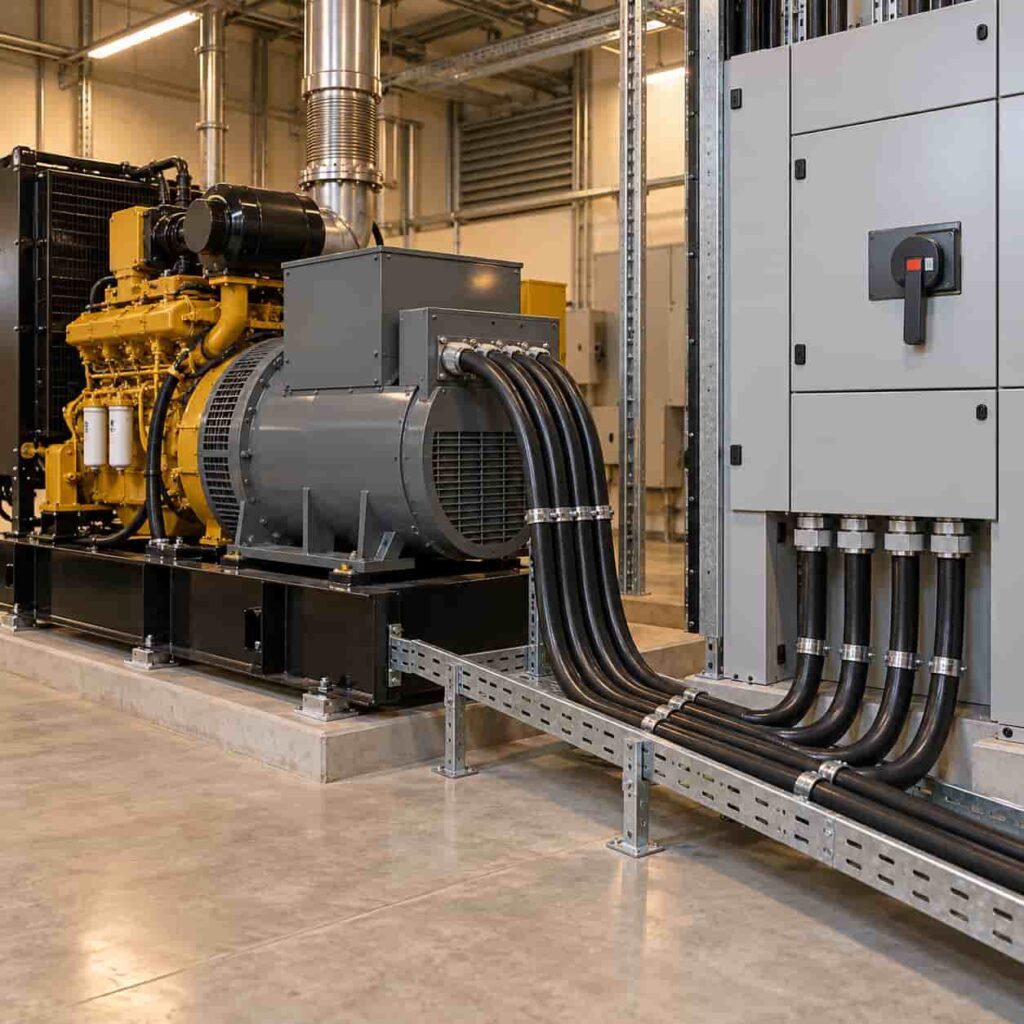
Generator-to-ATS Cable Connections: Backup Power Done Right Quick Answer: Generator cable sizing is a derating-and-termination exercise: the run must carry full load current at elevated temperatures, survive vibration and hold voltage drop low for clean transfer. When the utility supply fails, the generator-to-ATS cable becomes the most important run of copper in the building. It […]
Cable Planning for 30kW+ AI Racks: Density Is the New Problem
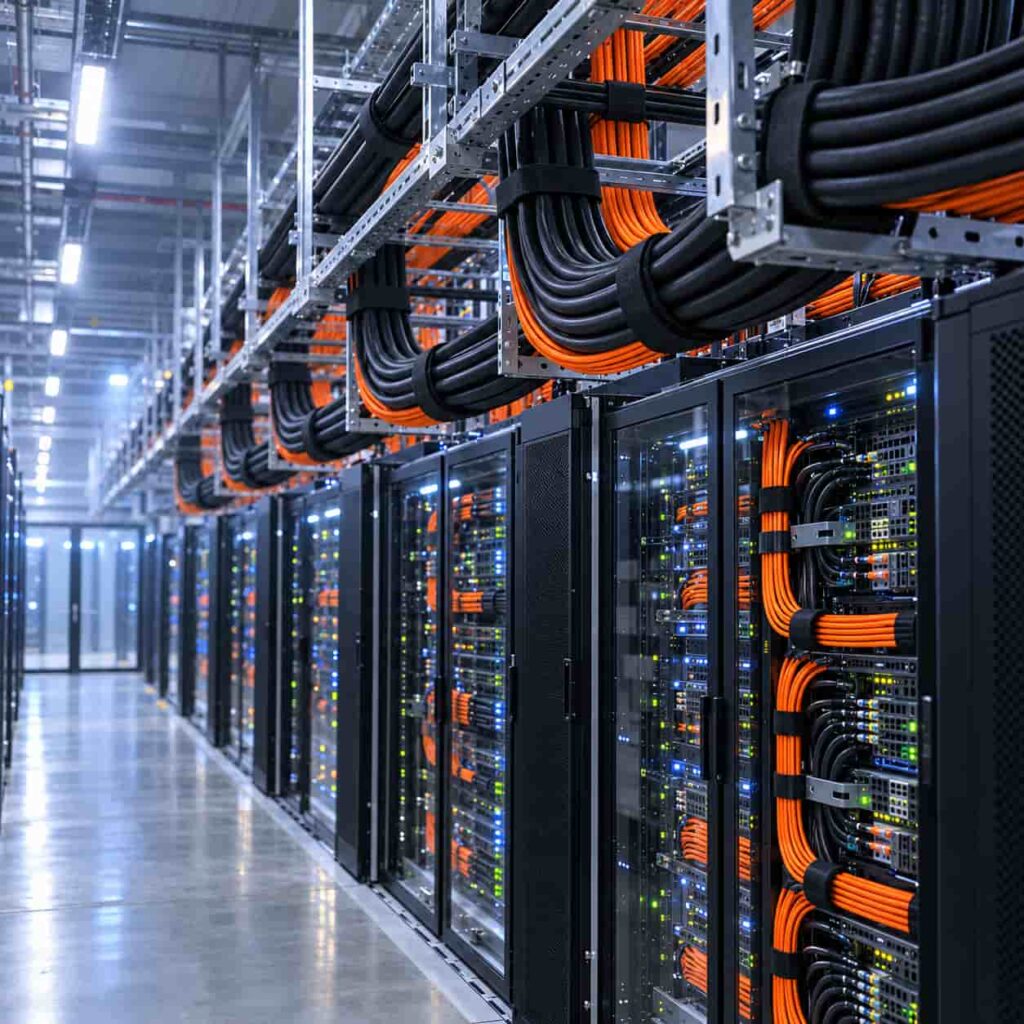
Cable Planning for 30kW+ AI Racks: Density Is the New Problem Quick Answer: A 30kW AI rack multiplies feeder current and grouping derating, not just cable count — high-density rack cabling must be planned per route with real ampacity inputs. Ten years ago a well-provisioned enterprise rack drew 5 kW and nobody argued about cable. […]
How Liquid Cooling Changes Cable Selection in AI Facilities
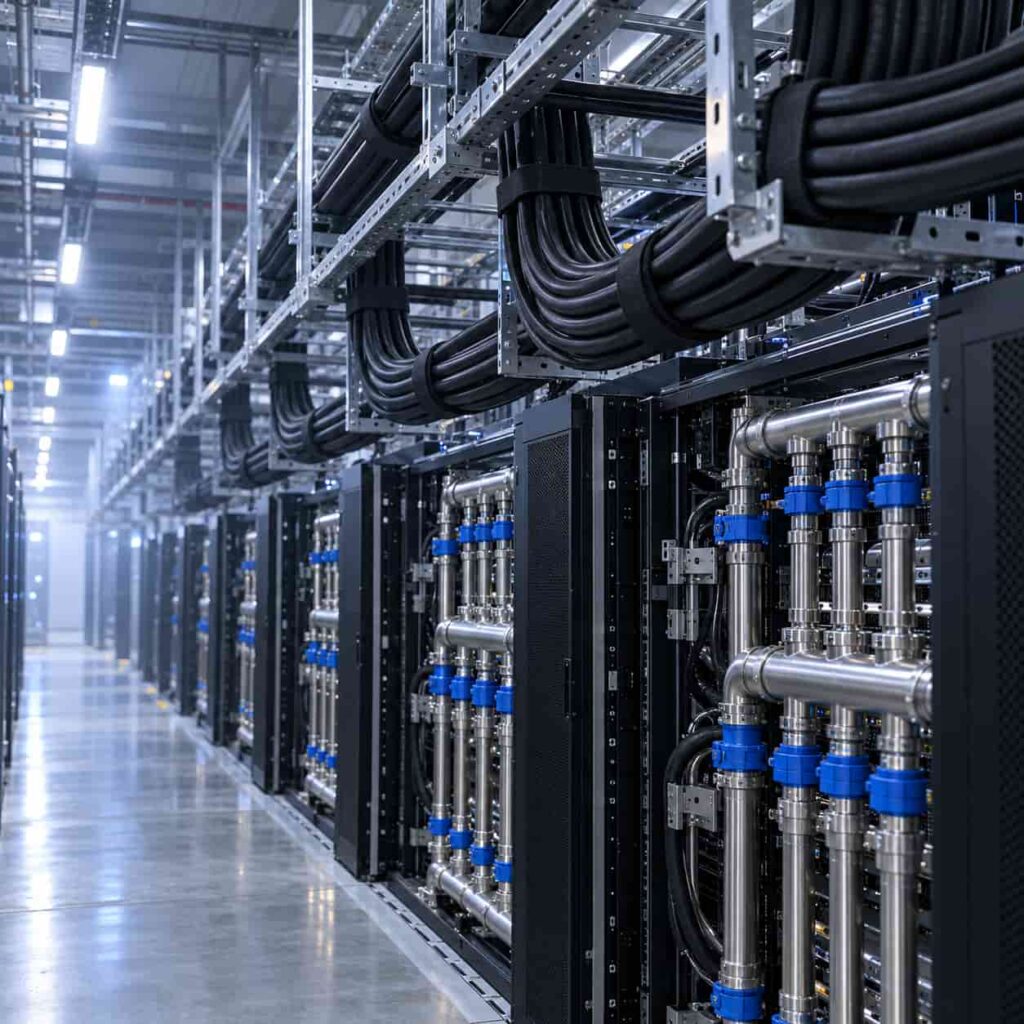
How Liquid Cooling Changes Cable Selection in AI Facilities Quick Answer: Liquid cooling does not change what cable is — it changes the numbers: more current, higher temperatures and tighter routing push conductor sizing and verification up a level. Liquid cooling arrived in AI facilities as a thermal technology and stayed as an electrical one. […]
Prefabricated Modular Cabling: Building Data Centers Faster
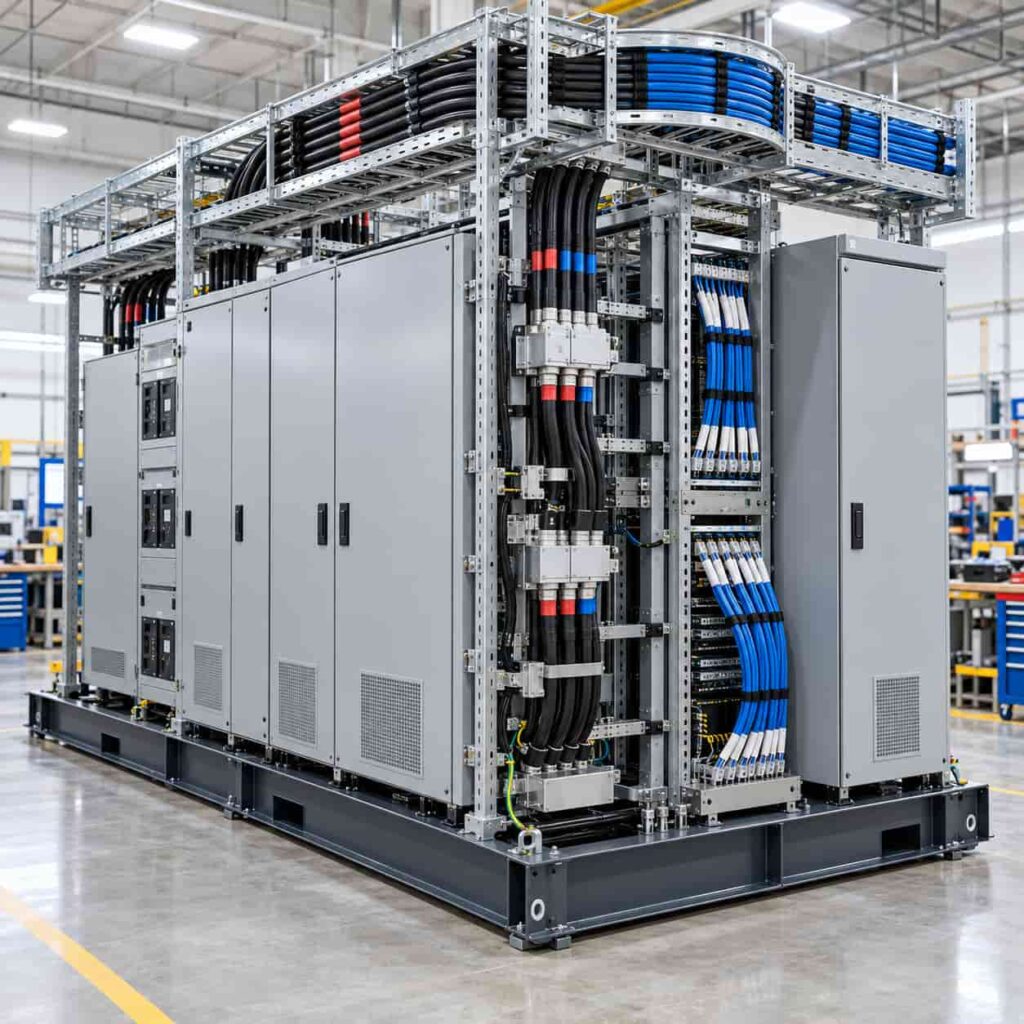
Prefabricated Modular Cabling: Building Data Centers Faster Quick Answer: Prefabricated modular cabling moves cable cutting, termination and testing into the factory, ships complete power and network assemblies to site, and turns a data hall into a plug-and-commission exercise — trading on-site labor for design freeze. Introduction Traditional cable installation front-loads its risk to the site: […]
Grounding and Bonding Cable for Data Centers: What to Specify
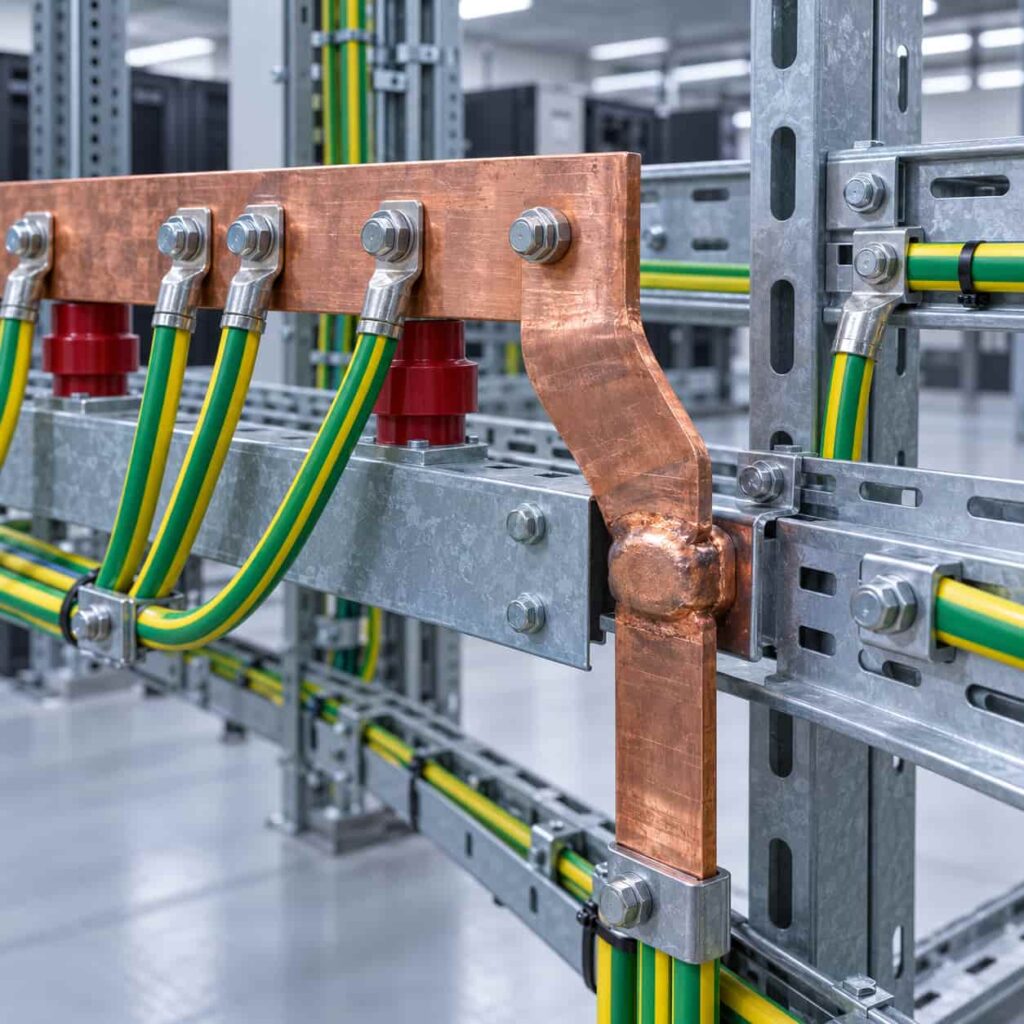
Grounding and Bonding Cable for Data Centers: What to Specify Quick Answer: A data center grounding system needs bare copper earth electrodes and ring conductors, green-yellow insulated bonding conductors on every tray and rack, and correctly sized lightning protection down conductors — all specified by size, connection method and test value, not as an afterthought […]
Sizing UPS and Battery Cables for Data Center Backup Power
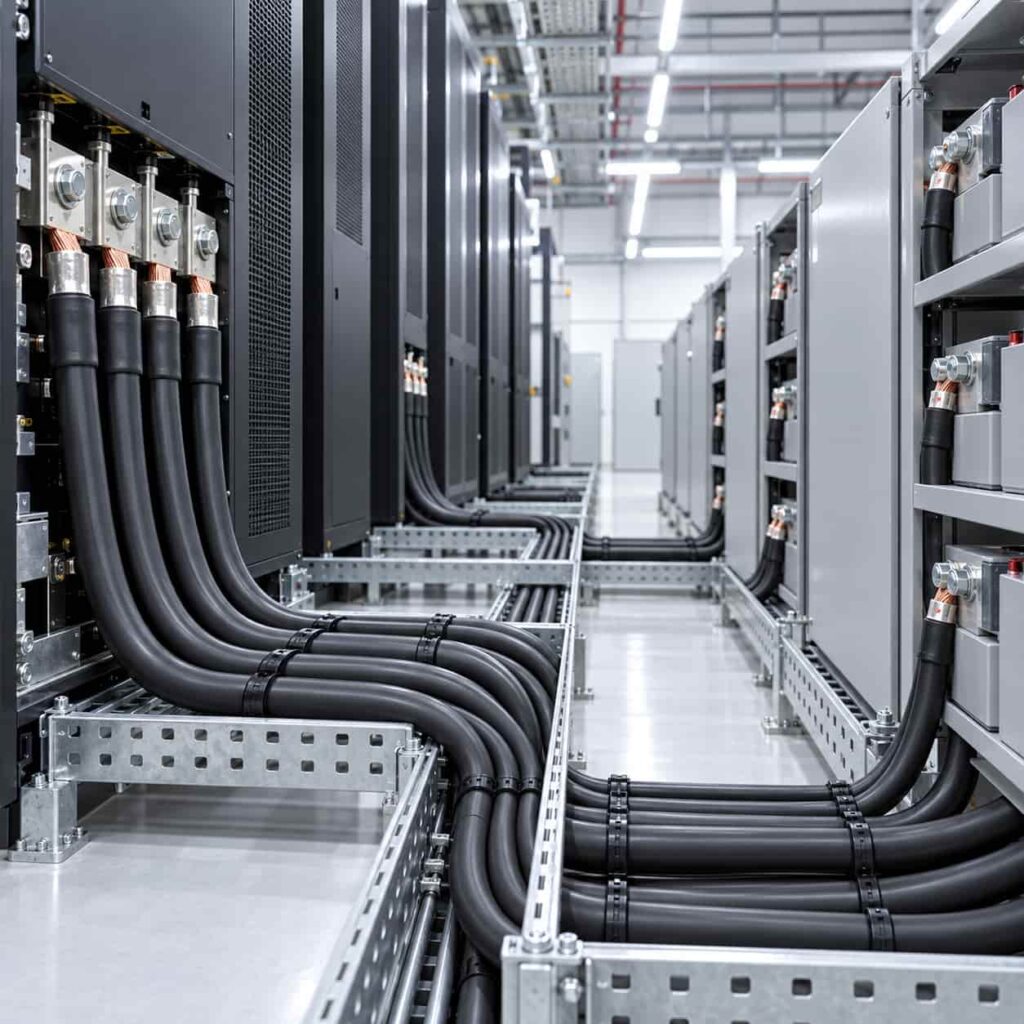
Sizing UPS and Battery Cables for Data Center Backup Power Quick Answer: UPS and battery cables are sized from the DC and AC currents they actually carry — not the kVA nameplate — then corrected for battery-room temperature, tray grouping and voltage drop, with fine-stranded Class 5 copper for the terminations. Introduction UPS cabling fails […]
LSZH Cable Requirements for Data Centers: What Specifiers Miss
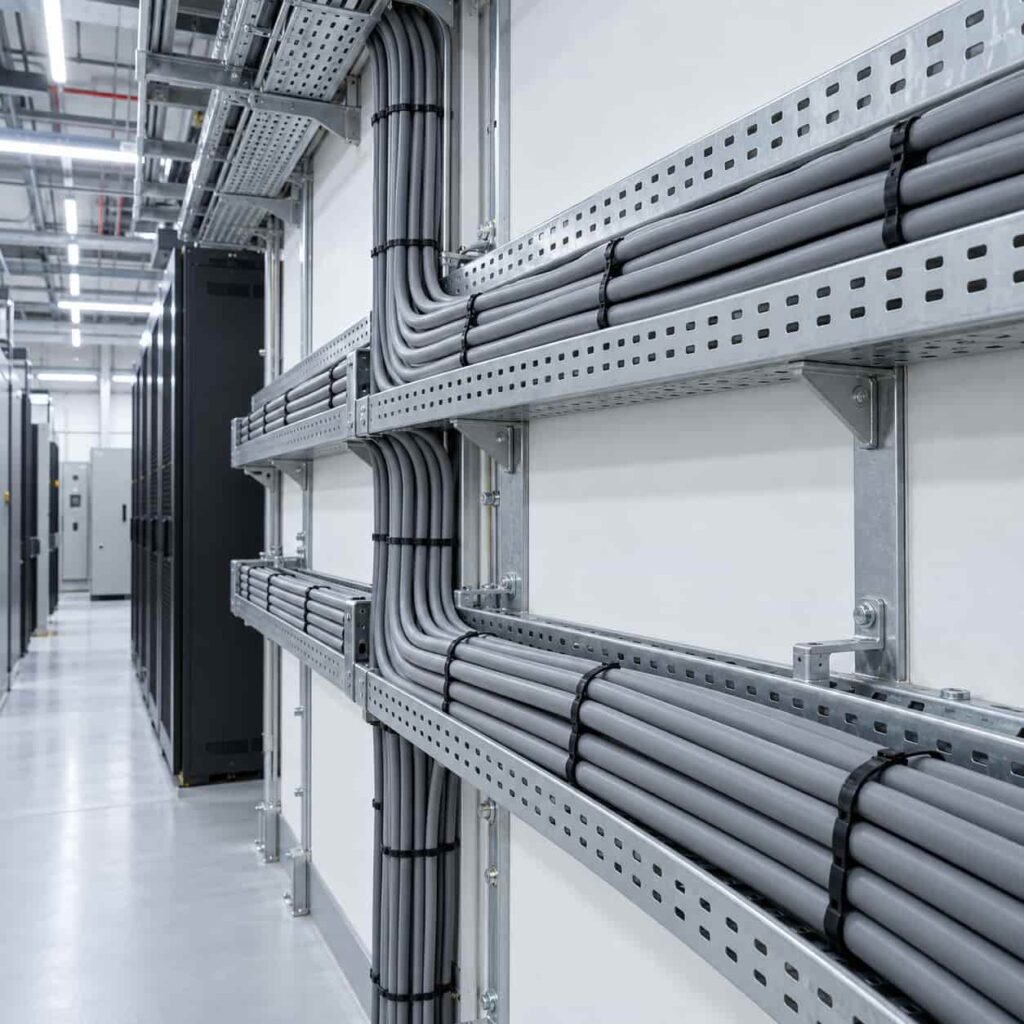
LSZH Cable Requirements for Data Centers: What Specifiers Miss Quick Answer: LSZH cable in a data center must pass three separate tests — IEC 60332 flame spread, IEC 60754 halogen content and IEC 61034 smoke density — and getting only one of them right still leaves the specification exposed. Introduction The case for halogen-free cable […]