Buying Cable for Construction Sites: A Project Procurement Guide
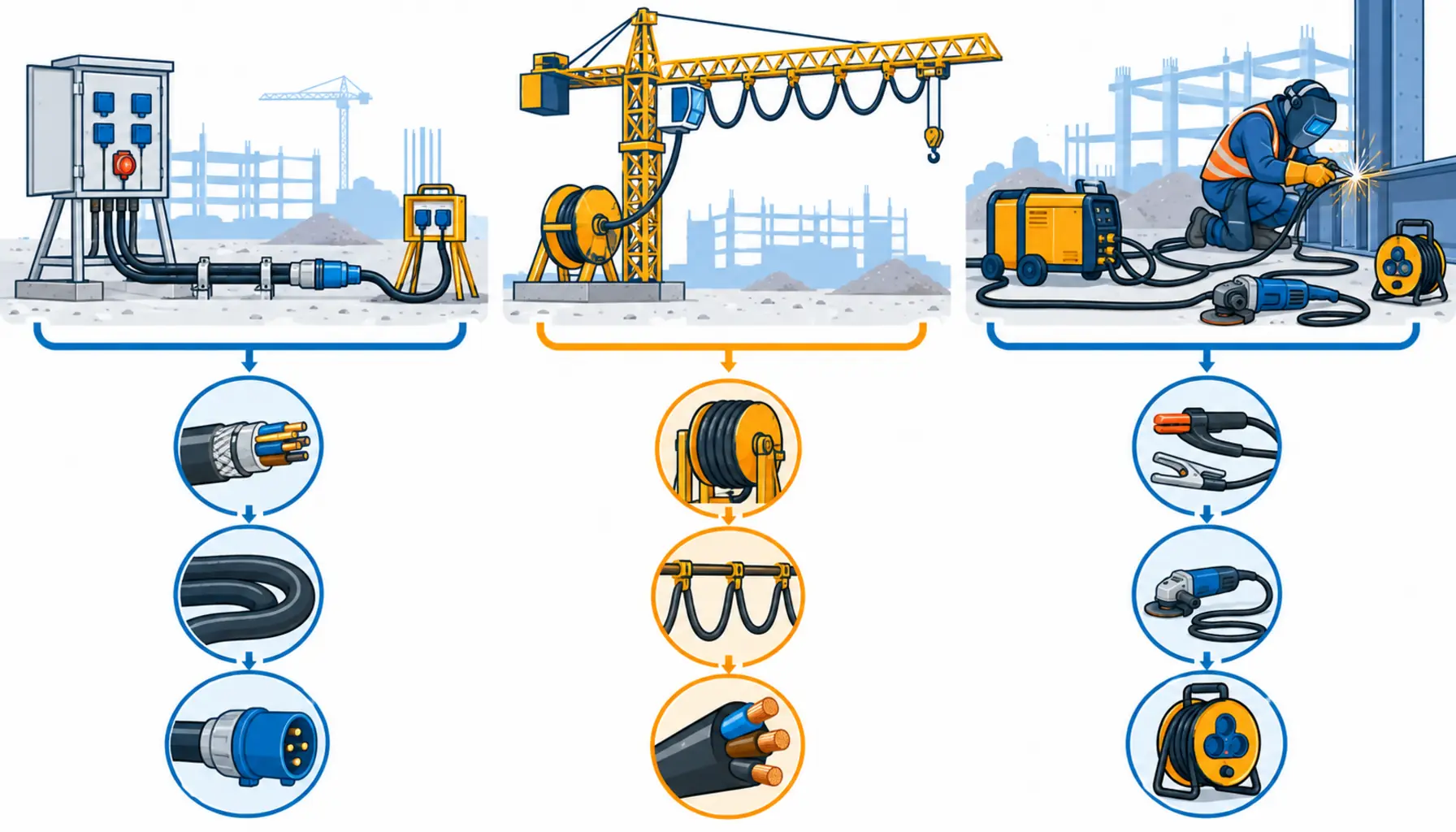
Quick Answer: Construction site cable is bought on three separate lines, and most bad orders come from treating them as one. Temporary power from board to workface is an installation decision. Supply to tower cranes, hoists and site machinery is a moving-duty decision. Tools and welding leads are a consumables decision with a safety file attached. Each line has its own specification, evidence and failure mode. This guide works through all three: what to specify, what to demand from the supplier, what each family costs and how each one fails.
Introduction
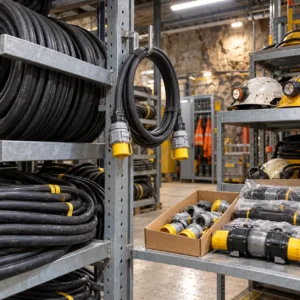
Construction is the most transient environment cable ever works in. A plant cable is installed once and inspected for twenty years. A site cable is unreeled, dragged across compacted ground, run over by a delivery truck, coiled up and unreeled again on the next project, and still has to carry a crane load.
That cycle is what separates site procurement from plant procurement: the specification is about how many times the cable will be handled and how roughly, not only the electrical load. It is also about speed: a cable order that misses the crane energisation date stops a crane, not a cable run. Where site scope reaches beyond cable into boards and transformers, our note on the coordinated power equipment supply model explains why cable and switchgear bought from one source usually land together.
Site Duty: What Construction Does to Cable
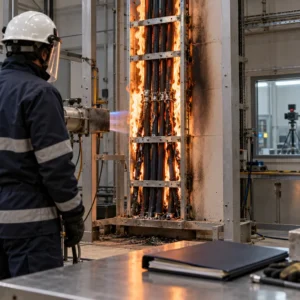
Mechanical duty first. Site cable is dragged, coiled, stood on and driven over. The sheath takes abrasion from aggregate and scaffold tube, the conductors bend at every drum and plug, and the cable takes tension whenever someone moves it by pulling. What takes a circuit down is almost never insulation ageing; it is a sheath cut, a crushed section or a broken conductor at the plug.
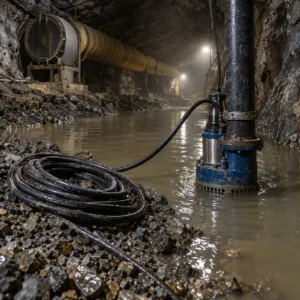
Weather and ground. Cable lies in mud and standing water through a wet season, in full sun through a dry one, and UV degrades the wrong jacket compounds within months. Water finds every nick in a damaged sheath.
Electrical duty. Site loads are mixed and lumpy: welding sets drawing cyclically, cranes starting against load, pumps running in a trench. Runs are long relative to their load, so voltage drop is a real constraint, and the distribution gets reconfigured as the building grows.
The Three Procurement Lines
Sort the order into three lines before writing a specification: they are bought, failed and inspected differently.
Line one: temporary power. From the supply point through distribution boards to the workface: armoured feeders, service cable on the structure, submains to floor distribution. Installed once per phase and handled rarely.
Line two: machinery supply. Tower cranes, hoists, concrete pumps, piling rigs. This is moving-duty cable: festoons, reels and trailing connections that flex and wind thousands of times. It is the most technical line, where under-specification fails inside a season.
Line three: tools and welding. Extension leads, tool cables and welding leads, bought in volume, damaged constantly and inspected most often, because a damaged tool lead is the site’s most common electrical safety finding.
The table below is the scope of a site cable purchase across those three lines: what to specify, what evidence to demand, what drives cost and lead time, and how each family actually fails.
| Cable family | Duty on site | What to Specify | Evidence to Demand | Cost and Lead-Time Driver | How It Fails |
|---|---|---|---|---|---|
| Armoured feeder and submain cable | Installed per phase, buried or on the structure, handled rarely | Armour type, insulation class, conductor size for voltage drop, sheath suited to burial or surface, drum lengths to suit the route | Conductor resistance figures, insulation test results, sheath and armour construction drawing | Copper content dominates; large drums move logistics and crane time | Damage at backfill, water ingress at a damaged sheath, termites or rodents in the wrong ground |
| Rubber connecting cable to distribution boards | Unreeled, dragged, coiled and re-laid every few weeks | Fine-stranded flexible conductor, EPR or rubber insulation, heavy rubber sheath, oil and water resistance, plug-compatible sizes | Flex cycle data, sheath abrasion results, low-temperature flexibility where winters apply | Sheath compound sets the price band; stock sizes ship fast, bespoke ends add days | Sheath cuts from aggregate and scaffold, crushed sections under traffic, broken strands at the plug |
| Festoon and flat cable for hoists | Flexed every cycle of the hoist, flat multi-core, hung in loops | Flat or round construction to suit the trolleys, bend radius at the trolley, core count and pilot cores, weather rating | Flex test at the declared radius and cycle count, flat profile dimensions, weathering data | Flat constructions are made to order in long lengths; trolley count multiplies the footage | Conductor fatigue at the trolley clamp, core shorts where loops collapse, UV cracking |
| Reeling cable for tower cranes | Wound and unwound under tension on the crane drum | Reeling duty rating, torsion behaviour for the winding pattern, drum geometry, length and working tension | Reeling cycle test evidence, torsion test for spiral drums, sheath elongation figures | Reeling-rated construction costs well above standard; drum matching is engineering work | Corkscrewing after torsion, conductor breakage at the drum entry, flattened sheath at the guide |
| Welding cable | Dragged to the workface daily, coiled hot, run over | Conductor cross-section against welder duty cycle and lead length, fine stranding, high-flex rubber sheath, connector compatibility | Conductor resistance per metre, flex and abrasion data, flame retardance rating | Copper-heavy, so price tracks the copper market directly; stock sizes ship in days | Broken strands near the lug, burned insulation at the electrode holder, cuts that expose conductor |
| Tool and extension leads | Constant handling, constant inspection, replaced often | Core size to the tool load, plug and socket rating, sheath colour for visibility, length standardisation across the site | Standard certifications, inspection regime compatibility | Volume item; standardising lengths and types saves more than unit price shopping | Nicks and exposed conductors, failed plug mouldings, home-made repairs that fail inspection |
Construction Choices That Decide Service Life
Conductor stranding. Any cable that moves needs a finely stranded flexible conductor. The gap between a Class 5 and a lightly stranded conductor is the gap between a cable that survives a season of handling and one that works its strands loose at the plug within weeks.
Sheath compound. Rubber and EPR sheaths take abrasion, stay flexible in cold weather and recover from coiling. PVC is cheaper and fine for fixed runs on the structure, but dragged across aggregate it cracks within months. Our note on abrasion-resistant cable jackets compares compounds for drag duty.
Weather resistance. Cable in sun for a year needs UV-stabilised construction; cable in standing water needs splash-resistant design. For the workface lines that live in mud and rain, a splash-resistant rubber cable is the baseline, and heavy-duty yellow rubber connecting cable is the board-to-distribution workhorse.
Flat versus round. Festoons and hoist runs usually take flat cable, which hangs flat in loops and seats in the trolleys; round cable suits drums and trailing duty. Getting it backwards shows up as loop collapse and clamp failures.
Machinery Supply: Reels, Festoons and Bend Radius
The machinery line is where site cable gets genuinely engineered, and two numbers decide most of it.
The first is bend radius. Every trolley, drum entry and guide imposes a minimum bend, and a cable bent tighter than its rating fails at that point however gently the rest of the run is treated. Suppliers quote the figure optimistically for some constructions, so fix the trolley and drum geometry first; our note on cable minimum bend radius covers where the optimistic numbers come from.
The second is cycle count. A tower crane winding its drum a hundred times a day is a reeling application measured in tens of thousands of cycles, needing cable rated for reeling duty and, where the drum winds in a spiral, the right torsion behaviour. Standard flexible cable is not reeling cable; the difference shows up as corkscrewing within months. Our notes on reeling cable constructions and on flat festoon composite cable cover both constructions.
Then the interfaces. Factory-fitted ends on festoon and reeling cable pay for themselves the first time a clamp or drum entry is re-terminated badly. Buy cable, guidance and terminations as one package where the supplier can own all three.
Temporary Power: Boards, Submains and the Workface
Line one is an architecture decision as much as a cable decision. Supply point, main boards, floor sub-boards and final circuits form a hierarchy, and cable is selected per level, not per site.
From supply to main boards. Armoured feeder cable sized on voltage drop as much as ampacity, because site runs are long and loads are at the far end. Drum lengths should match pulling sections, or joints land where nobody planned them.
Between boards. Heavy rubber connecting cable sized with headroom, because the board it feeds will be reconfigured. This is where the three-level construction distribution box philosophy applies: supply, distribution and final circuits kept distinct, so a fault at a tool trips the last board, not the site.
Final circuits. Flexible cord and tool leads, standardised across the site. Standardising lengths, colours and connectors makes inspection fast and damaged leads obvious.
Generators sit at the head of this hierarchy, and the cabling between sets, changeover and boards has its own rules; our note on generator ATS cable connections covers them.
Sizing for Long Runs and Mixed Loads
Site voltage drop problems come from the geometry: long runs and small loads scattered along them. Three inputs settle the argument before the order.
Actual route length. Measured along the route the cable takes, including vertical runs and slack for reconfiguration. Plan distances understate site routes by a margin that eats the voltage drop budget.
The load’s starting behaviour. A crane or pump starting against load draws several times running current, and the dip at a far board on a thin conductor is what trips contactors. State starting current and frequency in the RFQ, not just running kilowatts.
Diversity handled honestly. Site boards are rated on diversity, but the welding sets and compressors that actually run together decide the real current. Size against the realistic simultaneous load with the calculation shown, and the order carries a conductor size you can defend.
What to Freeze Before the Order Goes Out
These items are cheap at specification stage and expensive once the crane is waiting.
| Decision | What to State | Evidence to Attach | Cost of Leaving It Open |
|---|---|---|---|
| Line assignment per run | Temporary power, machinery supply or tools, run by run | A cable schedule mapping runs to line and duty | One construction bought for three duties |
| Machinery geometry | Festoon trolley spacing, drum dimensions, working tensions | System drawing with the bend points marked | A cable that fits the load but not the trolleys |
| Weather exposure | UV, water, mud, winter temperatures per run | Sheath compound declarations per run | First-inspection failures on the exposed runs |
| Conductor sizing basis | Route length, running and starting current, diversity used | Voltage drop calculation per feeder | Brownouts at the far boards and a re-order |
| Ends and terminations | Factory-fitted ends where handling is frequent, gland types | Termination schedule matched to the cable schedule | Field terminations that fail inspection weekly |
| Drum lengths and handling | Lengths to suit pulling sections, drum mass limits, marking | Packing list checked against the schedule | Joints in the wrong places, drums a site crane cannot lift |
| Inspection and test plan | Which tests witnessed, what records ship per drum | Written plan with acceptance criteria | Volume accepted on a sample nobody kept |
| Price basis | Copper basis, validity window, revision rule for the schedule | Quotation terms naming the basis | A quote months stale when the order lands |
Lead Time and Cost Structure
Site cable lead time splits the way the lines do. Tool leads and standard welding cable are stock, shipped in days. Feeder and connecting cable in standard constructions is made to order but fast, one to three weeks. The machinery line is the long pole: reeling and festoon cable in long continuous lengths matched to drum and trolley geometry runs four to eight weeks, plus fitted ends.
On cost, copper is the largest component of every line and the only one that moves between tender and order. Programmes quote months before they buy, and a feeder order can be a large copper position by then. Ask at quotation stage how the copper element is handled and how long the price holds. Some suppliers, ourselves included, fix a copper basis for a stated window against the spot copper price, which turns copper risk into a dated commitment. Our note on copper price lock contracts explains those windows, and cable price breakdown shows what else sits inside the unit price.
Incoming Inspection: What to Check Before It Is Hung
Against the order, before anything is unreeled. Check drum count, lengths and markings against the packing list and cable schedule, and photograph the markings. Drums get separated from their paperwork within days, so traceability starts at the gate.
Electrical checks on the machinery line. Continuity and insulation resistance on every festoon and reeling length, end to end, before it goes up the crane. A core fault found on the ground is a drum swap; at the top of the mast it is two days of access equipment.
Construction verification on samples. Cut samples from feeder drums for conductor area, insulation and sheath thickness. This settles the substitutions argument while the supplier can still fix it; our note on the cable sample approval process covers the exchange without holding up delivery.
Warranty terms on the machinery line. Festoon and reeling cable carries the highest failure stakes, so read what the warranty covers before the order, not after the first failure; our note on power cable warranty terms lists the clauses that matter.
When a Site Cable Specification Is Not the Answer
When the failure is handling, not cable. Connecting cable cut at the same point every month is a routing problem. Barricade the route before paying for a heavier sheath; the heavier sheath loses that fight too, just more slowly.
When the machinery cable is asked to fix a worn drum. A reeling cable replaced into a drum with a damaged entry guide or failing slip ring gets destroyed like the last one. Fix the system, then buy the cable.
When one specification is stretched across all three lines. A heavy rubber construction that satisfies the festoon duty is wasteful money on fixed submains, and a PVC armoured feeder dragged to the workface is a weekly repair item. Three lines, three specifications.
When voltage drop is being solved at the load end. Conductor upsizing to fix a dip that comes from a bad layout is the expensive version; sometimes the answer is moving the board closer, and the cable schedule is cheaper than the re-order.
When the cheapest lead is bought for a safety inspection environment. Tool leads are consumables, but they are also the most inspected item on site. Non-standard leads bought on unit price cost their price back in failed inspections within a quarter.
RFQ Checklist
- Line assignment per run: temporary power, machinery supply or tools
- Route lengths measured on site, including vertical runs and reconfiguration slack
- Running and starting current per feeder, with the diversity basis stated
- Voltage drop limit the design must meet, with the calculation expected from the supplier
- Machinery geometry: trolley spacing, drum dimensions, working tension, winding pattern
- Weather and ground exposure per run: UV, water, mud, winter temperature
- Conductor class and sheath compound specified per line, not site-wide
- Factory-fitted ends where handling is frequent, with the termination schedule
- Drum lengths matched to pulling sections, with drum mass limits for site handling
- Inspection and test plan with witnessing points and records per drum
- Copper basis with validity window, and the revision rule for schedule changes
- Delivery sequence against the programme: what must land before crane energisation
Conclusion
Site cable is bought well when the three lines are kept separate: an installation specification for temporary power, a moving-duty specification for the machinery, and a consumables policy for tools and welding. Freeze the geometry, the sizing basis and the copper terms before the order, and work every machinery lead time back from the crane energisation date.
Kexingyu Cable Group (KXYE) has manufactured cable in Quanzhou since 1996, including the heavy rubber connecting cable, festoon and reeling constructions, and welding leads that site duty calls for, with factory-fitted ends and the testing to back them. Send us the cable schedule with the run duties and site conditions, and we will come back with constructions per line, the test evidence for each, and a delivery sequence against your programme. The fastest route is a request for quotation.