
LiFePO4 vs Other Battery Chemistries for Commercial Storage
Compare LFP, NMC, sodium-ion, LTO, and lead-acid batteries by safety behavior, energy density, cycle duty, temperature performance, maturity, and lifecycle value.
Why Battery Chemistry Matters—but Does Not Decide Everything
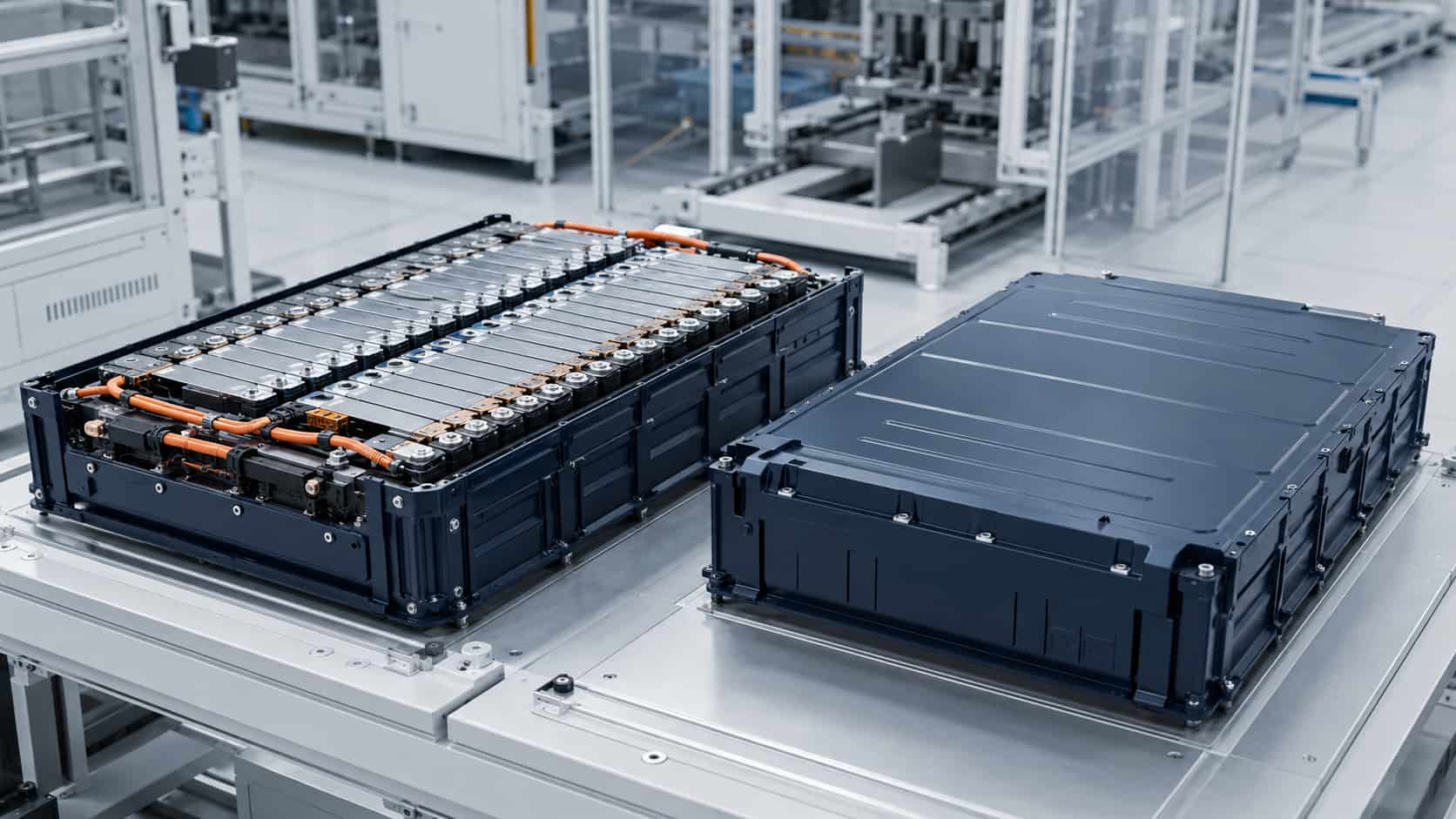
Battery chemistry influences voltage, energy density, thermal behavior, power capability, temperature response, degradation, raw-material exposure, and cost. For a commercial battery energy storage system, those characteristics affect enclosure size, cooling, usable state-of-charge range, operating strategy, warranty, and safety engineering.
Chemistry is not a complete measure of system quality. Two LFP systems can perform very differently because of cell design, manufacturing consistency, module construction, BMS limits, cooling, electrical protection, fire mitigation, controls, and operating conditions. Buyers should use chemistry to understand the design envelope, then verify the exact cell and complete system.
There is also no universal cycle-life number for a chemistry. Results depend on depth of discharge, charge and discharge rate, temperature, state-of-charge window, rest periods, end-of-life definition, and whether the figure comes from a cell test or a warranted installed system.
LiFePO4: The Mainstream Stationary-Storage Choice
Lithium iron phosphate, written LiFePO4 and commonly shortened to LFP, uses an iron-phosphate cathode. It has become a major choice for stationary storage because it combines relatively strong thermal stability, long cycling potential, high efficiency, and a supply chain that has scaled rapidly.
Compared with nickel-rich lithium-ion chemistries, LFP generally has lower cell-level energy density. That can increase enclosure count, weight, land use, or room space for the same usable energy. The penalty is often acceptable in stationary projects, but it still matters at rooftop sites, constrained commercial buildings, offshore locations, and projects with expensive land or transport limits.
LFP should not be described as non-flammable or immune to thermal runaway. It still uses combustible electrolyte and can release heat and gases under severe abuse or internal failure. Its chemistry can provide a wider thermal-stability margin than many nickel-based alternatives, but safe deployment remains a system-level responsibility.
NMC: Higher Energy Density with Different Risk and Supply Trade-Offs
Nickel manganese cobalt, or NMC, is a family rather than one fixed formula. Different nickel, manganese, and cobalt proportions change capacity, stability, cost, and durability. NMC is widely associated with electric vehicles because higher energy density reduces battery weight and volume.
For stationary storage, NMC can be valuable where footprint and weight are unusually constrained or where an existing approved design already uses it. However, buyers must evaluate thermal management, propagation controls, operating window, degradation warranty, and emergency-response design carefully. The appropriate comparison is between tested systems, not a generic NMC cell and a generic LFP cell.
Nickel and cobalt exposure can also affect supply-chain risk and responsible-sourcing requirements. Ask for the actual cathode type, cell manufacturer, manufacturing location, traceability, change-control process, and recycling route.
Sodium-Ion: Commercializing, but Not Yet a Drop-In LFP Replacement
Sodium-ion batteries replace lithium as the charge-carrying ion and can use more abundant raw materials. They are attracting attention for stationary storage, cold-climate performance, and supply-chain diversification. Large stationary sodium-ion projects have entered operation, and manufacturing capacity is expanding.
The technology is not one standardized chemistry. Cathode and anode choices vary, so energy density, cycle performance, safety behavior, and low-temperature capability must be verified for the exact cell. Current sodium-ion products generally trail optimized LFP in energy density, and their supply chain, field history, bankability, service network, and residual-value data are less mature.
Do not assume sodium automatically means lower system cost. Cell materials are only part of installed cost; lower energy density can increase enclosures, foundations, cooling, cabling, transport, and land requirements. Compare warranted AC performance and total installed lifecycle cost.
LTO: Long-Life and High-Power Performance at a Premium
Lithium titanate, or LTO, usually refers to a lithium-ion battery using lithium titanate in the anode. It can support high charge and discharge rates, broad temperature operation, strong cycling performance, and a favorable safety profile when properly engineered.
Its disadvantages are lower energy density and typically higher cost per kWh. LTO is therefore more likely to fit high-power, frequent-cycling, fast-charge, cold-temperature, or mission-critical duties than ordinary energy shifting. A high cycle rating does not create value unless the application actually uses it.
Lead-Acid: Mature and Economical for Limited-Cycling Duties
Lead-acid batteries remain common in UPS, telecom, emergency power, and other applications because the technology is mature, widely serviceable, and supported by established recycling channels. Valve-regulated lead-acid systems can offer a lower initial equipment cost for short-duration or infrequently cycled backup.
For daily cycling and deep discharge, lead-acid generally provides less usable depth, lower cycle performance, more weight and volume, and greater sensitivity to sustained high temperature than modern lithium systems. Ventilation, charging method, maintenance, replacement frequency, and floor loading must be included in the comparison.
Lead-acid can still be the rational choice when outages are rare, runtime is modest, space is available, local service is strong, and initial capital constraints outweigh lifetime cycling value.
How the Chemistries Compare
The comparison table below uses directional descriptions rather than universal numbers. Published values vary by cell design and test method, and system-level performance also includes BMS limits, PCS efficiency, auxiliaries, thermal management, and degradation reserves.
Treat any supplier figure as incomplete unless it states the test temperature, depth of discharge, C-rate, state-of-charge range, rest periods, end-of-life threshold, and whether the result is measured, modeled, or warranted.
| Chemistry | Energy density | Cycling potential | Thermal behavior | Main trade-off | Potential fit |
|---|---|---|---|---|---|
| LFP | Medium | High under suitable conditions | Generally more stable than nickel-rich lithium-ion | Larger and heavier than higher-density lithium options | Daily-cycling C&I and utility storage |
| NMC | High | Application and formulation dependent | Requires careful system-level thermal and propagation design | Safety margin, degradation and nickel/cobalt supply exposure | Space- or weight-constrained installations |
| Sodium-ion | Currently lower than optimized LFP | Product-specific; field history is developing | Must be verified for the exact cell and system | Lower maturity, bankability and energy density | Stationary projects prioritizing diversification or cold performance |
| LTO | Low | Very high potential in suitable high-rate duty | Generally favorable when properly engineered | Higher cost and larger footprint per kWh | Fast-charge, high-power or very frequent cycling |
| Lead-acid | Low | Lower for deep daily cycling | Mature, but temperature and ventilation remain important | Weight, usable depth, replacement frequency | Low-cycle backup and established service networks |
Directional comparison only. Performance varies by cell design, temperature, C-rate, depth of discharge, state-of-charge window, end-of-life threshold, and system integration. Request project-specific test and warranty data.
Safety Must Be Evaluated at Cell, Module, Unit, and Installation Levels
Cell chemistry affects how a failure begins and develops, but an incident outcome also depends on propagation barriers, spacing, enclosure strength, detection, ventilation, gas management, ignition sources, electrical isolation, cooling, suppression strategy, and emergency response.
Request test evidence for the exact cell, module, rack, and energy storage unit configuration. Confirm whether the proposed installation spacing, orientation, ventilation, state of charge, firmware, and fire strategy match the tested arrangement. A test report from a related cell or older enclosure revision should not automatically be accepted.
The U.S. Department of Energy describes lithium-ion as the dominant electrochemical grid-storage technology while emphasizing continuing work on safety across technologies. Applicable codes and approvals remain jurisdiction-specific, as explained in our BESS buyer guide.
Cycle Life, Calendar Life, and Warranty
Cycle life measures repeated charge-discharge use under stated conditions. Calendar life describes degradation over time even when cycling is limited. A ten-year project with one cycle per day and a high-temperature site may be constrained by both.
Ask for beginning-of-life and end-of-life usable energy, retained power, allowed throughput, permitted cycles per day, temperature range, C-rate, depth of discharge, state-of-charge limits, availability assumptions, and the remedy if performance falls below guarantee. Verify whether the warranty is based on years, cycles, energy throughput, or whichever limit occurs first.
The supplier’s operating model should show how the EMS reserves capacity and how augmentation or module replacement will be handled. A headline cell cycle figure is not a system capacity warranty.
Temperature and Environmental Conditions
Low temperature can reduce available power, increase charging limitations, and require heating. High temperature accelerates degradation and raises cooling demand. The magnitude differs by chemistry and cell design, but no chemistry removes the need for an engineered thermal envelope.
Request charge and discharge power curves, usable-energy curves, start-up requirements, derating, storage limits, and auxiliary consumption across the project’s actual temperature range. Consider altitude, humidity, salt, dust, solar loading, flooding, and indoor heat rejection as well.
Energy Density and the Real Project Footprint
Energy density may be reported by mass or volume and at cell, module, rack, or enclosure level. Cell-level figures can hide spacing, busbars, cooling, protection, structure, service access, PCS, transformers, and safety separation.
For site selection, compare usable AC energy per total compliant project area and per transported or supported mass. Include access roads, maintenance aisles, HVAC clearances, fire separation, foundations, and augmentation space. Our containerized-versus-cabinet storage guide explains how packaging changes the site calculation.
Procurement Checklist for Chemistry Selection
Define the application, required power, usable energy, duration, cycles per day, depth of discharge, expected throughput, backup reserve, response time, and project life.
Request the exact cell manufacturer, model, chemistry variant, manufacturing site, traceability system, qualification reports, and notification process for cell or material changes.
Compare warranted AC usable energy, retained power, efficiency, auxiliary consumption, degradation, availability, and operating limits—not cell datasheets alone.
Review thermal-runaway and propagation evidence, hazard analysis, installation limitations, emergency procedures, transport classification, recycling obligations, and local approvals.
Model total cost including equipment, footprint, civil work, cooling energy, augmentation, scheduled replacements, downtime, service, spares, recycling, and financing assumptions.
Which Chemistry Fits Which Project?
For many daily-cycling C&I and utility projects, LFP offers a practical balance of maturity, cycling, safety margin, and cost. NMC may suit unusually space- or weight-constrained sites when the complete system safety and warranty case is strong.
Sodium-ion deserves project-specific evaluation where cold performance, material diversification, or future cost potential is important, but buyers should examine bankability, field history, energy density, and supplier support. LTO can fit high-power or exceptionally frequent-cycling duties where its premium is justified. Lead-acid can remain competitive for low-cycle backup with strong local service and recycling.
The correct answer can change with tariff, climate, land cost, duty cycle, safety authority, financing requirements, and supplier capability. Chemistry selection should follow the project model rather than precede it.
Where Kexingyu Power Fits In
Kexingyu Power can discuss commercial energy storage configurations based on the project’s duty cycle, footprint, climate, safety requirements, electrical architecture, and lifecycle targets. Availability of a particular cell chemistry, model, certification, and warranty must be confirmed for the exact project and destination.
Provide load and dispatch data, required kW and usable kWh, installation environment, expected cycles, temperature range, target standards, delivery schedule, and preferred enclosure format. This allows a system proposal to be evaluated on documented performance rather than chemistry marketing.
Final Takeaway
LFP is a strong default for many stationary-storage projects, but its name alone does not guarantee safety, long life, or value. NMC, sodium-ion, LTO, and lead-acid each retain credible roles when their characteristics match the application.
Compare exact cells and complete systems under the same operating assumptions. The winning chemistry is the one that delivers the required usable energy, power, safety evidence, availability, and warranty at the lowest credible lifecycle risk.
Frequently Asked Questions
Key questions about battery chemistry for commercial storage.
LFP generally offers stronger thermal stability than many nickel-rich lithium-ion chemistries, but it is not risk-free. Cell quality, propagation control, cooling, electrical protection, ventilation, installation layout and emergency response determine system-level safety.
There is no universal figure. Cycle life depends on temperature, depth of discharge, C-rate, state-of-charge window and end-of-life definition. Use warranted usable energy and throughput for the project duty rather than a headline cell-cycle claim.
NMC can be useful where weight or footprint is tightly constrained. Buyers must compare the exact system’s thermal design, test evidence, degradation guarantee, supply chain and lifecycle cost against LFP alternatives.
Not automatically. Sodium can offer raw-material and diversification advantages, but current system cost also reflects energy density, manufacturing scale, enclosures, land, cooling, balance of system, bankability and service support.
LTO can fit high-power, rapid-charge, very frequent-cycling or demanding-temperature applications where long cycling potential and power capability justify its higher cost and lower energy density.
Yes, particularly for infrequently cycled backup where initial cost, local service and recycling are priorities. It is generally less attractive for deep daily cycling because of usable-depth, weight, temperature and replacement considerations.
Request the exact cell model and factory, test conditions, usable-energy warranty, retained power, efficiency, throughput, degradation model, safety reports, operating limits, change control, traceability, service plan and recycling route.
Recent Posts
Switchgear Lead Times in 2026: A Buyer’s Planning Guide
Switchgear Lead Times in 2026: A Buyer’s Planning Guide Realistic timelines vary significantly by voltage class and type — here’s how to plan procurement without
What Is BESS? A Guide to Battery Energy Storage Systems for C&I Buyers
What Is BESS? A Guide to Battery Energy Storage Systems for C&I Buyers A clear explainer on what BESS systems actually are, how the pieces
Switchgear vs Transformer Lead Times: What EPC Contractors Need to Know
Switchgear vs Transformer Lead Times: What EPC Contractors Need to Know A practical breakdown of why these two equipment categories behave differently in procurement, and