
BESS Manufacturer China: Questions to Ask Before You Buy
A practical due-diligence framework for verifying Chinese BESS factories, cell traceability, system integration, testing, certification, software, warranties, and international service.

Why BESS Supplier Due Diligence Must Go Beyond Price
A battery energy storage system is a long-term electrochemical, electrical, software, and service asset. The buyer is not only purchasing cabinets and cells; it is relying on capacity retention, power availability, controls, safety evidence, spare parts, software access, and warranty support over many years.
China has a broad BESS supply chain that includes cell producers, battery-pack manufacturers, PCS suppliers, enclosure factories, system integrators, trading companies, EPC contractors, and brand owners. These roles can overlap, but they are not interchangeable. A polished catalogue does not reveal which organization designs the system, owns the certifications, controls the firmware, or carries warranty liability.
The objective is not to prove that a supplier owns every component. It is to establish a controlled and accountable supply chain in which every interface, document, test, change, and warranty obligation has a named owner.
1. Identify the Legal Entity and Actual Role
Request the Chinese legal company name, unified social credit code, registered address, manufacturing addresses, export entity, bank beneficiary, and corporate relationship among any affiliated companies. Ensure the quotation, contract, certificate applicant, nameplate manufacturer, invoice, and warranty issuer are consistent or their relationships are documented.
Ask whether the bidder is the cell manufacturer, battery-system manufacturer, system integrator, PCS manufacturer, OEM brand owner, distributor, or trading company. A trading company can still provide value, but it should not be represented as a factory, and the underlying manufacturer and warranty chain must be disclosed.
Verify who has engineering authority to approve the battery, BMS, PCS, EMS, cooling, enclosure, fire system, transformer, and switchgear combination. Determine who owns the final system design and interfaces.
2. Audit the Proposed Production Site
A site audit should follow the exact production route proposed for the order. Review incoming inspection, cell storage, grading and matching, module and rack assembly, torque control, insulation and high-voltage work, firmware loading, end-of-line testing, nonconformance control, rework, calibration, traceability, packing, and dangerous-goods storage.
Record line capacity, bottlenecks, shift patterns, equipment ownership, outsourced processes, skilled staffing, environmental controls, and current workload. Production capacity should be demonstrated through cycle time and resources, not a headline annual GWh number.
If several factories or contract manufacturers are involved, audit critical sites and define which one will appear on certificates, serial-number records, and shipping documents.
3. Verify Cell Source, Grade, and Traceability
Request the exact cell manufacturer, model, chemistry, nominal capacity, production site, datasheet revision, qualification reports, safety evidence, and supply agreement status. “Grade A” is not a sufficient technical specification unless acceptance criteria and traceability are defined.
Incoming quality control can include identity verification, visual inspection, dimensions, mass, open-circuit voltage, AC or DC resistance, capacity sampling, self-discharge screening, and lot review. The appropriate tests and sampling plan depend on the cell and supplier relationship.
Each shipped rack should be traceable through cell and module lots to incoming inspection, assembly data, torque records, firmware, test results, and final system serial number. Ask how traceability remains accessible after warranty expiration.
4. Control the Bill of Materials and Design Changes
Freeze an approved bill of materials covering cells, busbars, fuses, contactors, sensors, BMS boards, connectors, cables, cooling equipment, fire devices, enclosure, PCS, controls, firmware, and critical components.
The contract should require advance notice and written approval for changes that can affect performance, safety, certification, interoperability, maintenance, or spare parts. A “form-fit-function equivalent” statement is not enough for a certified electrochemical system.
Request the engineering-change process, certification impact assessment, validation plan, updated drawings, release notes, and management of existing field units. Confirm how long the baseline configuration will remain supported.
5. Separate Component Credentials from Complete-System Evidence
Use the BESS certification checklist to map UN 38.3 transport evidence, industrial battery safety, integrated system certification, thermal-runaway testing, PCS safety and grid compliance, EMC, environmental ratings, market access, and local installation approvals.
Match every document to the proposed manufacturer, model, cell, PCS, enclosure, hardware, firmware, production site, ratings, and standard edition. A report for a similar cabinet or another brand does not automatically cover the order.
Ask which documents already exist, which are in progress, and which depend on a paid project order. Put required evidence and approval dates into contractual release gates.
6. Review the BMS, EMS, and Software Ownership
A BESS can use reliable hardware and still fail operationally because of weak integration. Request the BMS hierarchy, sampling coverage, SOC/SOH method, dynamic charge and discharge limits, alarm structure, PCS interface, EMS functions, protocol point lists, and failure behavior. Our BMS vs EMS guide explains the control boundaries.
Identify the software owner and all third-party licenses. Confirm local operation without the cloud, data ownership, API availability, hosting location, user roles, remote access, cybersecurity updates, firmware approval, rollback, configuration backup, and support after the service term.
Do not accept a cloud demonstration as proof of site integration. Require an integration test using the proposed BMS, PCS, EMS, meters, communications, and firmware.
7. Validate Capacity, Efficiency, and Degradation Claims
Determine whether quoted energy is nominal DC, usable DC, or usable AC, and whether power is continuous at the required voltage, temperature, altitude, and power factor. Define the measurement boundary for efficiency and auxiliary consumption.
Request cell test conditions and a project-specific degradation model covering temperature, SOC window, C-rate, cycles, calendar time, rest periods, and end-of-life threshold. Our battery chemistry comparison explains why chemistry names and headline cycle counts are insufficient.
The performance guarantee should state beginning- and end-of-life usable energy, retained power, availability, round-trip efficiency or charge/discharge efficiency, auxiliary boundary, annual throughput, duty limits, measurement method, test uncertainty, and remedy.
8. Define FAT Before the Purchase Order
Factory acceptance testing should be agreed before manufacturing so that test equipment, procedures, witnesses, data, and acceptance criteria are available. Do not let the supplier define the acceptance threshold after the system is built.
Depending on scope, FAT can include document and nameplate review, visual and dimensional inspection, torque and wiring records, insulation resistance, dielectric tests where applicable, grounding continuity, protection and emergency stop, BMS alarms and contactors, communications, cooling, fire interfaces, PCS operation, charge/discharge capacity, power, efficiency, auxiliaries, controls, and simulated faults.
Use calibrated instruments and capture raw electronic data tied to serial numbers. Define retest rules, punch-list closure, witness or remote-witness arrangements, and shipment release authority. The U.S. Department of Energy procurement resources likewise treat acceptance and field performance testing as explicit procurement tasks.
9. Examine Quality Systems Through Records
ISO 9001 certification can support a quality framework, but it does not prove that one BESS model meets its performance or safety requirements. Audit how the system works in practice.
Sample incoming inspection reports, work instructions, training records, torque logs, calibration certificates, nonconformance reports, root-cause analyses, corrective actions, supplier performance records, firmware releases, test failures, and customer-complaint closure.
Ask for first-pass yield and field-failure metrics with clear definitions and time periods. Confidentiality can be protected, but claims without definitions or source records should not receive scoring credit.
10. Check Export, Packing, and Dangerous-Goods Capability
Confirm the party responsible for dangerous-goods classification, UN 38.3 evidence, state-of-charge restrictions where applicable, packaging, marks, labels, declarations, trained personnel, booking, and route approval. Different modes, carriers, ports, and destinations can impose different conditions.
Review packing drawings, corrosion and moisture protection, shock and tilt indicators, lifting points, center of gravity, transport configuration, loose components, storage temperature and duration, arrival inspection, and commissioning storage procedures.
Clarify Incoterms and responsibility for export clearance, freight, insurance, import documents, customs corrections, demurrage, damaged cargo, and return or disposal of defective lithium equipment.
11. Make the Warranty Executable Internationally
A warranty in years is incomplete. Define usable-energy retention, power, throughput, cycles, operating conditions, availability, excluded events, required maintenance, monitoring access, response time, root-cause process, replacement criteria, labor, travel, freight, customs, removal, reinstallation, and recommissioning.
Identify the legal warranty obligor and whether a local distributor can bind it. Require a single case-management and escalation process, even when regional service partners perform the work.
Evaluate financial capacity and continuity risk. Options can include parent guarantees, warranty reserves, performance security, spare-parts commitments, or insured solutions where commercially appropriate.
12. Verify Service, Spares, and Training
Ask for named service locations, technician qualifications, languages, time-zone coverage, remote-response targets, site-response targets, escalation contacts, and reference projects in comparable markets.
Build a spare-parts plan from failure modes, fleet size, interchangeability, customs lead time, and contractual response. Confirm whether replacement BMS boards, modules, fans, pumps, sensors, contactors, PCS modules, and controllers need pairing, parameter files, or licensed tools.
Training should cover installation, commissioning, normal operation, alarms, isolation, emergency actions, maintenance, software, and data export. Define training materials, language, participant competence, refreshers, and authorization limits.
13. Treat OEM and ODM Changes as Engineering Changes
Private labeling can affect nameplates, manuals, declarations, certification records, warranty contacts, and importer responsibilities. ODM changes to enclosure, cooling, cells, controls, fire systems, ratings, or firmware may require new validation or certification review.
Define who owns drawings, source code or escrow rights where relevant, tooling, test reports, certificates, trademarks, product liability, cybersecurity updates, and end-of-life support. Do not assume a customized product inherits the catalogue model’s evidence.
14. Use References as Evidence, Not Decoration
Request projects using the same product generation and similar climate, duty cycle, grid voltage, scale, and regulatory environment. Verify delivery date, operating period, availability, capacity performance, software stability, service response, and any material changes since deployment.
Contact reference owners independently where possible. A project list that only shows country, MW, and photographs cannot prove product identity or long-term performance.
BESS Manufacturer Due-Diligence Scorecard
Use the scorecard below to compare suppliers on evidence. Assign knockout requirements for unresolved safety, certification, legal-entity, or warranty issues; a weighted total should not allow a low price to compensate for a missing mandatory approval.
Record document references, conditions, open actions, owners, and deadlines alongside each score. Re-score after technical clarification and factory audit.
| Evaluation area | Evidence required | Scoring focus | Weight |
|---|---|---|---|
| Legal entity and role | Business records, factory/export/warranty entities, organization and contracts | Transparent accountability and consistent legal documents | 10% |
| Cell source and traceability | Exact cell model, incoming QC, lot records and serial genealogy | Traceability from cell lot through shipped system | 15% |
| Engineering and change control | Approved BOM, drawings, interfaces, ECN process and validation | Controlled baseline and certification-impact review | 15% |
| Certification and safety | Exact certificates, reports, listings, compliance matrix and open approvals | Evidence matches product, market and installation | 15% |
| Performance and FAT | Capacity, efficiency, degradation, FAT procedures, calibration and raw data | Guaranteed AC performance under project duty | 15% |
| BMS, EMS and cybersecurity | Architecture, point lists, software ownership, access, updates and fallback | Proven integration and lifecycle software support | 10% |
| Export and delivery | Dangerous-goods process, packing, route, Incoterms and production plan | Realistic compliant shipment and schedule control | 5% |
| Warranty, service and spares | Guarantees, remedies, legal obligor, regional support and spare-parts plan | Internationally executable lifecycle support | 15% |
Suggested weights only. Use knockout criteria for mandatory certification, safety, legal-entity and warranty requirements. Score the exact proposed configuration and document every condition, open action, owner and deadline.
Questions to Ask Before Award
Which legal entity designs, manufactures, exports, invoices, and warrants the exact BESS?
Which factories and outsourced suppliers will produce the cells, modules, racks, PCS, controls, enclosure, cooling, and fire equipment?
Can every shipped serial number be traced to cell lots, assembly records, firmware, test data, and approved BOM?
Which certificates and reports cover the exact configuration, and which project approvals remain open?
What performance is guaranteed at the AC point of connection at end of life, and under which duty and environmental conditions?
Who owns the BMS/EMS software and data, and what works without cloud access?
What FAT, site acceptance, field performance, service, spares, and warranty remedies are contractually included?
Where Kexingyu Power Fits In
Kexingyu Power can discuss standard and project-configured energy storage systems together with battery, PCS, controls, switchgear, transformer, documentation, testing, and export requirements. Exact capabilities, certifications, performance guarantees, delivery schedules, and service coverage must be confirmed in the project proposal and contract.
Send the technical specification, single-line diagram, site and climate data, duty cycle, required kW and usable kWh, target standards, compliance matrix, FAT requirements, destination, delivery schedule, software interfaces, and warranty expectations. This enables an evidence-based response rather than a catalogue quotation.
Final Takeaway
Selecting a BESS manufacturer in China should be a controlled technical, legal, quality, and lifecycle review. Factory ownership alone is not enough, and outsourcing alone is not a disqualifier. What matters is transparent responsibility and evidence across the full system.
Choose the supplier that can trace the product, freeze and control its design, prove performance and safety, pass agreed acceptance tests, deliver compliant export documentation, and support the installed fleet through an enforceable warranty.
Frequently Asked Questions
Practical questions about sourcing a BESS manufacturer in China.
Verify the Chinese legal entity, manufacturing address, production records, equipment ownership, staff, certificates, factory audit trail and relationship between the bidder, factory, exporter and warranty provider.
No. Many capable integrators source cells. The important controls are approved cell models, supplier qualification, incoming inspection, traceability, change control, system validation and an accountable warranty chain.
Follow incoming cells through storage, grading, assembly, torque control, firmware, testing, nonconformance, rework, calibration, traceability, packing and dangerous-goods handling at the actual proposed site.
Agree the FAT before production. It may include documents, wiring, insulation, grounding, BMS alarms, contactors, cooling, fire interfaces, communications, PCS operation, capacity, power, efficiency, auxiliaries, controls and simulated faults.
Define the AC or DC measurement boundary, temperature, SOC window, C-rate, throughput, auxiliaries and end-of-life threshold. Require project-specific degradation data and contractual performance guarantees.
Not automatically. Changes to branding, cells, enclosure, cooling, controls, fire systems, ratings or firmware can affect declarations, listings, test evidence and legal responsibilities. Require a certification-impact review.
It needs a clearly identified legal obligor, measurable guarantees, duty conditions, response and replacement times, labor, freight, customs and travel responsibilities, escalation, remedies, spare parts and continued software support.
Recent Posts
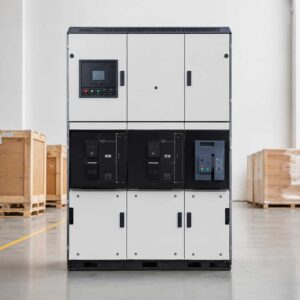
Switchgear Lead Times in 2026: A Buyer’s Planning Guide
Switchgear Lead Times in 2026: A Buyer’s Planning Guide Realistic timelines vary significantly by voltage class and type — here’s how to plan procurement without
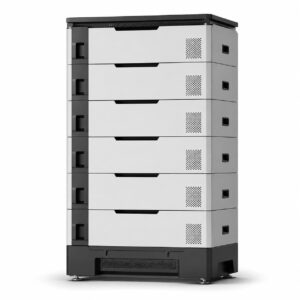
What Is BESS? A Guide to Battery Energy Storage Systems for C&I Buyers
What Is BESS? A Guide to Battery Energy Storage Systems for C&I Buyers A clear explainer on what BESS systems actually are, how the pieces
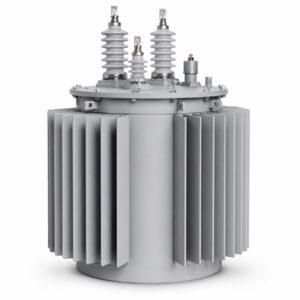
Switchgear vs Transformer Lead Times: What EPC Contractors Need to Know
Switchgear vs Transformer Lead Times: What EPC Contractors Need to Know A practical breakdown of why these two equipment categories behave differently in procurement, and